

Claude AcademyFor Professionals
AI hype, decoded into practical lessonsfor corporate professionals


One place to stay on the AI frontier
Curated video lessons - filmed by former strategy consultants
- From first setup to agentic systems
- New lessons as the tooling moves



Library of 100+ skills for professionals
- Finance, consulting and private equity
- Install in minutes, run the same way every time
Claude plugin for Tier-1 consulting slides
- Your template, your brand, every slide
- Fully editable PowerPoint, never flat images


Be the person your team asks about AI
Learn it once, then set the standard the rest of the team follows
From AI Noise and HypeTo Practical Implications
We decode the noise of AI hype ...
... into practical lessons for professionals
Video Workshopsto 10X Your Productivity with AI
Open Academy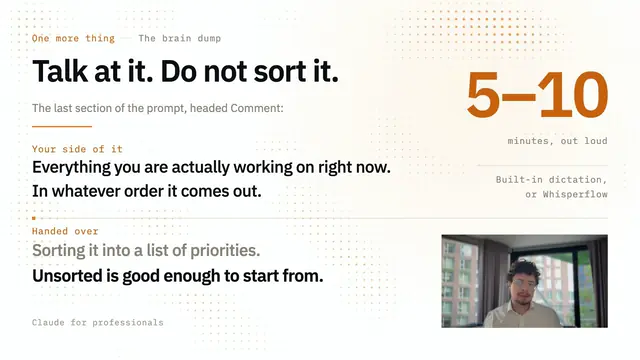

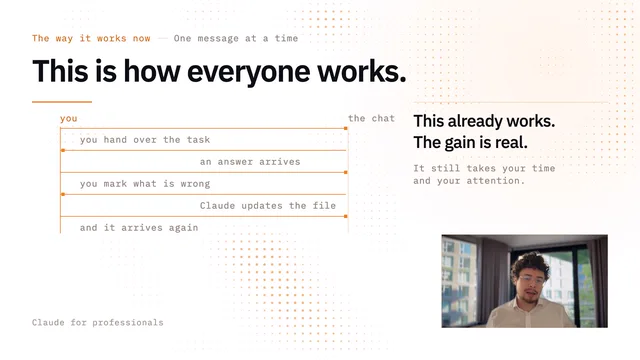
Stop Chatting. Start Delegating
Lesson 1: Chat, Cowork and Claude Code - understand the difference
Place any task on the right surface, and know why Cowork, which reads and writes files on your machine, beats Chat for real work
Lesson 2: Switch from Chat to an Agent That Works for You
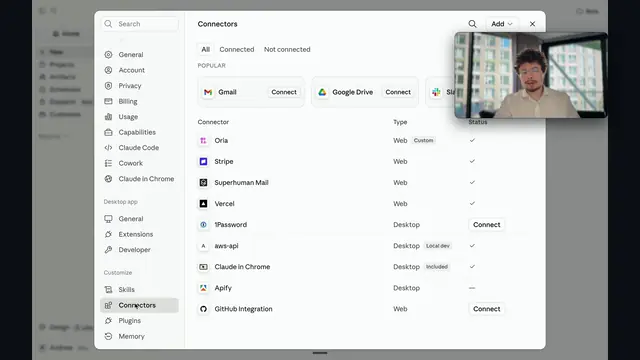
Wire Claude into your email, cloud storage and meeting recorder, then reconcile a week of recordings, calendar and mail into what you owe people
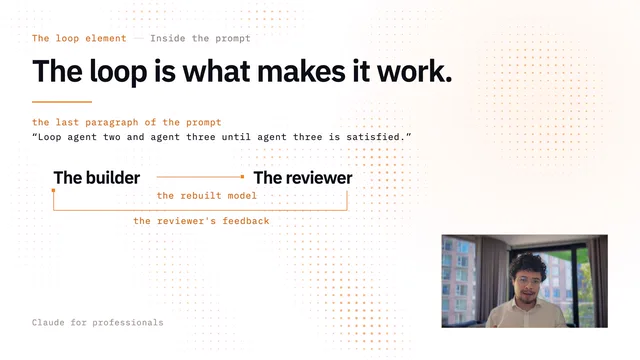
Lesson 3: Stop Prompting, Start Building Agentic Loops
Replace turn-by-turn prompting with one prompt running an architect, a builder and a reviewer in a loop, plus fan-out across twenty sub-agents
Lesson 4: Let Claude Loose in Chrome and Office
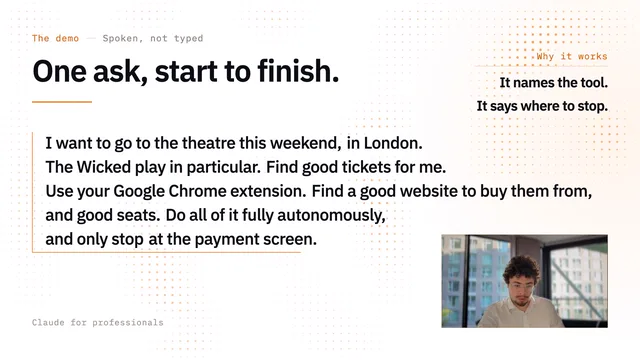
Run Claude inside Chrome, Excel, PowerPoint and Word, then watch the Chrome agent hold theatre tickets, stopping at payment
Lesson 5: Match the Model to the Stakes
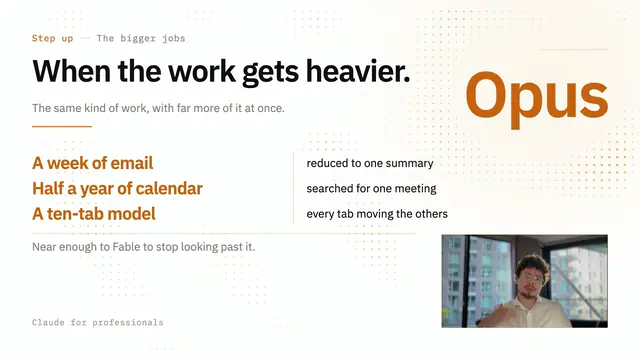
Pick model and thinking level: Sonnet for routine work, Opus on high for synthesis, extra high when defensible, Fable for hundred-file jobs
Make Claude Run Your Week
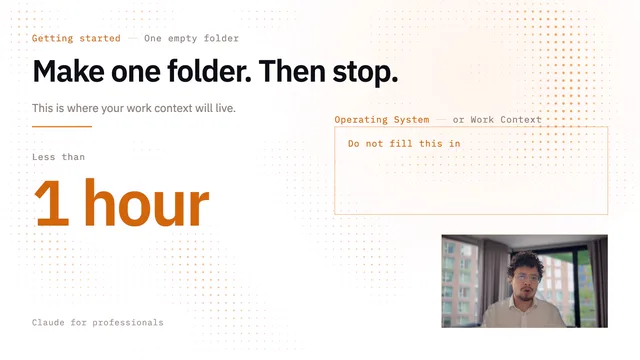
Lesson 6: Load Your Whole Job Into Cowork's Memory
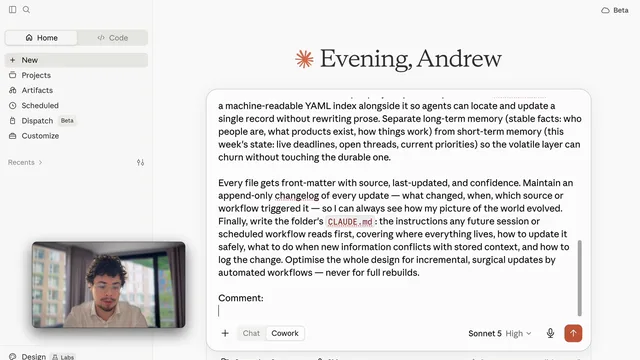
Build a permanent work-context folder in about an hour: sub-agents read every connector, Claude interviews you on the gaps, and every later session inherits it
Lesson 7: Run Your Claude Operating System
Navigate the instruction file and memory folders Claude wrote for itself, and correct them by asking rather than editing by hand
Lesson 8: Give Claude a Long-Term Brain in Obsidian
Build an Obsidian vault in layers, daily capture, per-client, durable reference, plus the index that tells Claude how to navigate it months later
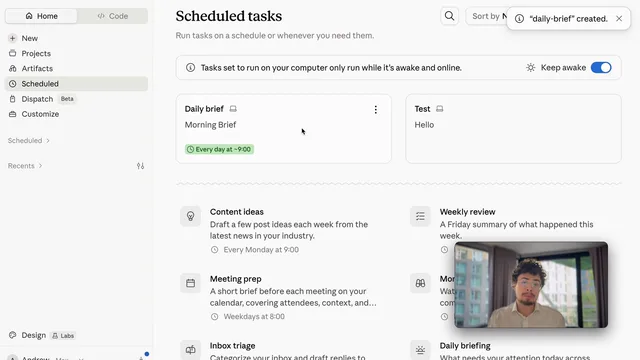
Lesson 9: Wake Up and the Work Is Already Done
Schedule Claude against your context folder so a morning brief, replies already drafted, is waiting when you open the laptop
Lesson 10: Pick Up the Same Session on Your Phone
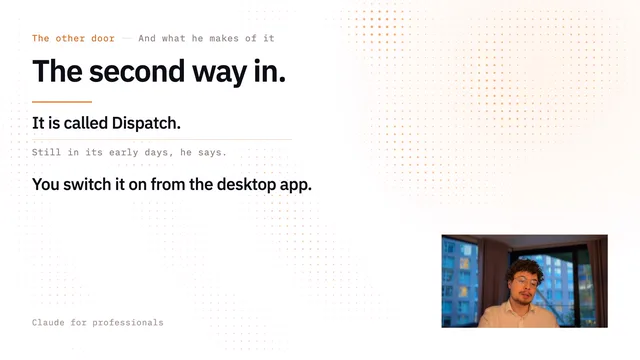
Carry a laptop session onto your phone: Claude Cloud runs server-side and keeps the same chats, unlike Dispatch
Turn Your Process Into a Skill
Lesson 11: Install Three Skills, Not Eighty
Judge which skills earn a permanent slot: three installed for good, the rest pulled per task, because eighty degrades current models
Lesson 12: Make Claude Write Like You
Build a skill that writes in your voice: Claude reads your sent mail, drafts samples for approval, then shifts register by recipient
Get the Model and the Deck Past Review
Lesson 13: Build Outstanding, Robust Models in Excel
Build models in Cowork and use the Excel plugin only to review them, with assumptions on their own tab and no hard-coded numbers in formulas
Lesson 14: Kill the AI Look in Your Slides
Kill the box-assembled look that gives a deck away: add Oria as a custom connector, then let Claude write content and Oria handle design
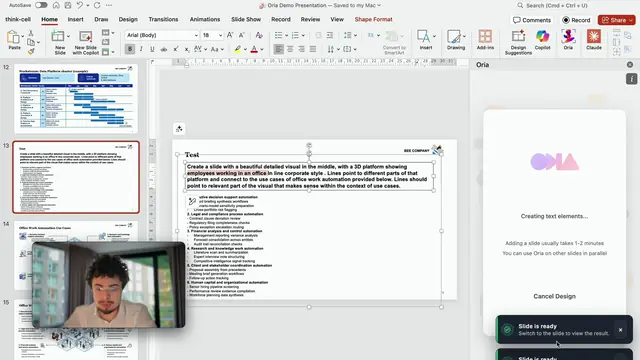
Lesson 15: Oria: Make Tier-1 Consulting Slides in PowerPoint
Set a reference style once from your own deck, then run text to slide, improve design and sketch to slide, landing as editable shapes in your template
Ship an App, Not a Prototype
Lesson 16: Take the Artifact Past the Demo
Save, update and share an artifact so it stops being a throwaway, and learn what it still lacks before anyone can rely on it
Lesson 17: Get It Off Your Laptop and Onto a URL
Turn what is on your laptop into a link a colleague opens on their phone, with version control so you cannot destroy your own work
Lesson 18: Give It a Database and a Login
Wire a hosted database and a login into your app so data survives a refresh and access decides who sees what
Lesson 19: Make It Survive Real Users
Harden the app for people who are not you: backups, sensible limits, and the checks worth running before you send the link round
Automate Only What Deserves It
Lesson 20: Answer Three Questions Before You Touch n8n
Decide in three questions whether you need n8n: unattended trigger, stored login, hundreds of runs. No to all three and Claude already does it
Lesson 21: Wire One Automation That Runs Without You
Ship one automation on hosted n8n with the split that matters: mechanical steps in the workflow, anything needing judgement handed to Claude
Lesson 22: Never Automate What Can Fail Quietly
Never automate anything whose quiet failure is expensive, and see why an agent that reads mail and sends messages is dangerous by design

Become Dangerously Productive with AI
For consultants, bankers and investors who want a compounding edge
What You Will Learn
Delegate Work Instead of Prompting
- Chat vs Cowork vs Code
- Local File Access
- Agent Loops
- Architect, Builder, Reviewer
- Key MCPs
- Google Chrome extension
Build Your Operating System
- Operating System
- Obsidian Memory
- Persistent context
- Scheduled Runs
- Office extension
- Excel models
Build and Apply Skills
- Build Your Own Skill
- Personal writing style
- Reusable voice
- Audience-aware drafts
- Annotate
- n8n Automations
Build Tier-1 Consulting Slides with Oria
- Oria for Slides
- Tier-1 consulting layouts
- Claude plugin workflow
- Your template, your brand
- Visual polish and review
- Fully editable PowerPoint
Frequently Asked Questions
Oria is not affiliated with, endorsed by, or sponsored by Anthropic. Claude is a trademark of Anthropic, PBC.
Oria is not affiliated with, endorsed by, or sponsored by Anthropic. Claude is a trademark of Anthropic, PBC.