

12 Claude Skills for Board-Ready Decks in PowerPoint
A pack of 12 Claude skills for board-ready decks. One skill per board page, from the SCQA narrative and executive summary to the KPI scorecard, financials, risk heatmap, capital allocation, and the decision page.
Claude skills for board-ready decks
This is a pack of 12 Claude skills for board-ready decks. Each skill teaches Claude to build one page of a board pack with the method a board expects, so the work that usually eats an evening becomes a structured draft you refine.
The skills are grounded in real methods, not vague best practice. SCQA and the Pyramid Principle set the narrative. RAG status drives the scorecard and the initiatives tracker. Variance bridges explain the financials. A likelihood and impact heatmap orders the risks. Capital allocation discipline frames the use of cash. The result is a pack that argues one story from cover to appendix.
Built for corporate strategy teams, CFOs and finance leaders, chiefs of staff, investor relations, and the consultants and bankers who prepare board materials. Each skill is one folder with a single SKILL.md file. Install the ones you need, or load the full set.
Download all 12 skills
One zip, one folder per skill. Free, no signup.
The 12 Skills You Get
The pack is grouped into four parts that map to how a board pack is built: set the narrative, report performance, cover strategy and markets, and govern risk. Every skill is also useful on its own. For the individual slides, pair this pack with our guides to the executive summary slide and the KPI dashboard slide.
From narrative to governance
Part 1 · 3 skills
Narrative & Framing
Use these to set the spine of the pack before you build a single page. SCQA opening, one governing thought, a clear ask, so the deck argues one story instead of reporting disconnected pages.
Board Narrative (SCQA)
Use when: The pack reads like a stack of department reports with no spine
Output: Governing thought, SCQA opening, page map
Executive Summary Page
Use when: A director must grasp the whole story from one opening page
Output: Action title, proof points, the ask
Decision & Ask Page
Use when: The board needs to leave with a specific, recorded decision
Output: Options, recommendation, what approval commits
Part 2 · 3 skills
Performance Reporting
Use these for the pages that answer are we on track. Metrics against plan with RAG status, financials with variances bridged, and a quarter-over-quarter accountability loop.
KPI Scorecard Page
Use when: The board needs to read performance at a glance
Output: Board metrics vs plan and prior, with RAG status
Financial Summary Page
Use when: The board needs the numbers behind the scorecard
Output: P&L, cash, balance sheet with a variance bridge
Quarterly Performance Review
Use when: Last quarter's commitments need to be closed out
Output: Commitments delivered or missed, next-quarter plan
Part 3 · 3 skills
Strategy & Markets
Use these to show how the strategy is being executed and how the outside world is moving. Initiative portfolio with value at stake, an outside-in market read, and the use of capital.
Strategic Initiatives Tracker
Use when: The board governs execution at portfolio level
Output: Initiatives with RAG, milestones, value, owners
Market & Competitive Update
Use when: The board needs the outside-in view, not internal reporting
Output: Market signals, competitor moves, so-what
Capital Allocation Summary
Use when: The board governs where cash is deployed
Output: Sources, uses, returns, proposed changes
Part 4 · 3 skills
Risk & Governance
Use these for oversight: principal risks on a likelihood and impact heatmap, material ESG against targets, and the discipline that keeps the body lean and the appendix complete.
Risk & Mitigation Page
Use when: The board needs its view of the principal risks
Output: Risk heatmap, owners, mitigations, movement
ESG / Sustainability Summary
Use when: The board exercises sustainability and governance oversight
Output: Material ESG metrics vs targets and commitments
Appendix Discipline
Use when: The body is bloating and the appendix is unnavigable
Output: Body-vs-appendix split, indexed backup pages
Parts 1 and 2 set the story and report the results. Parts 3 and 4 cover strategy, markets, risk, and governance. Run the narrative skill first to fix the spine, then build each page with its matching skill.
Setup Guide
Download the skills pack
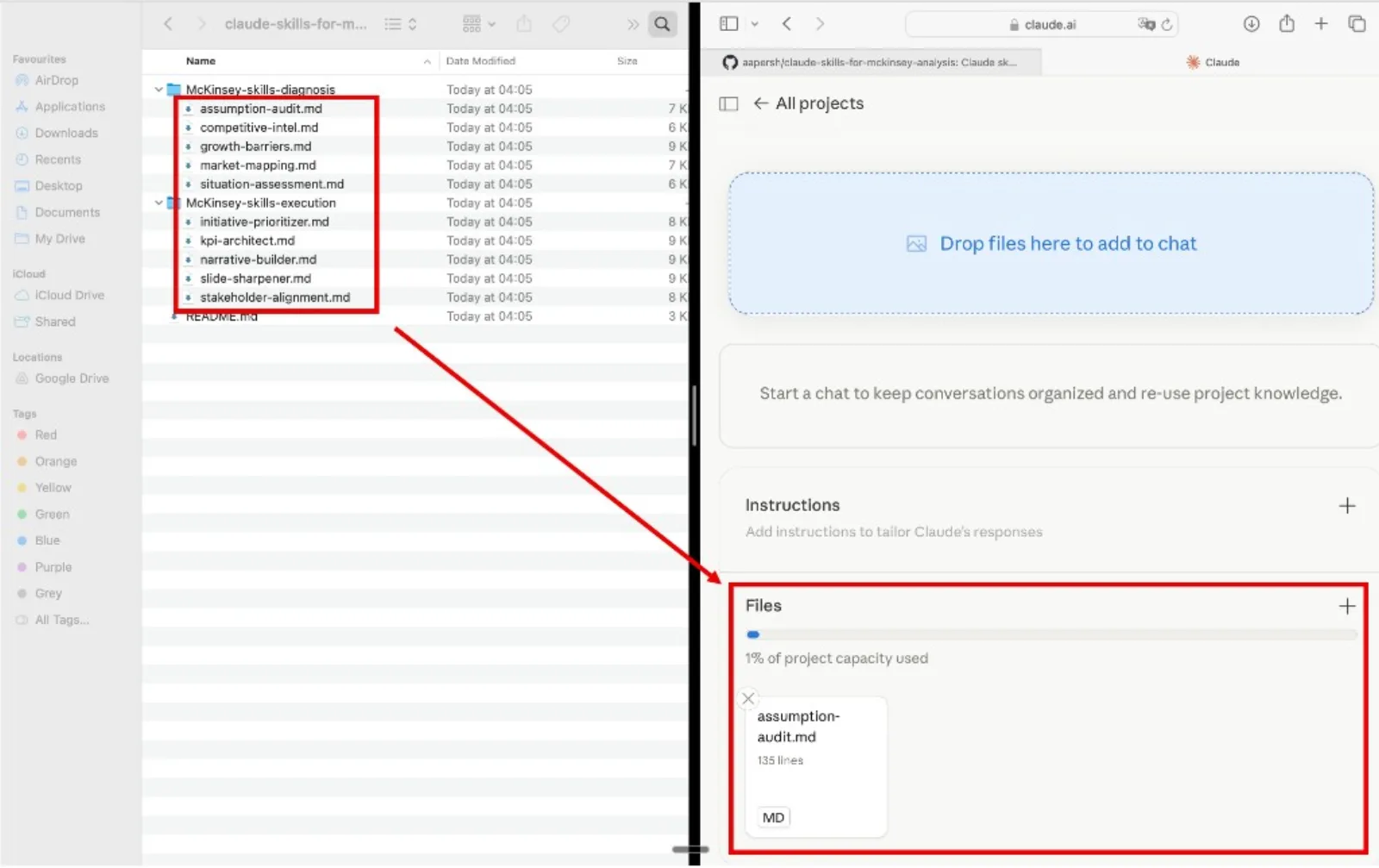
The zip contains all 12 skills, one folder per skill. Each skill is a single SKILL.md file. Unzip it anywhere. Keep the whole set, or pull out just the folders you need.
Create a Claude Project
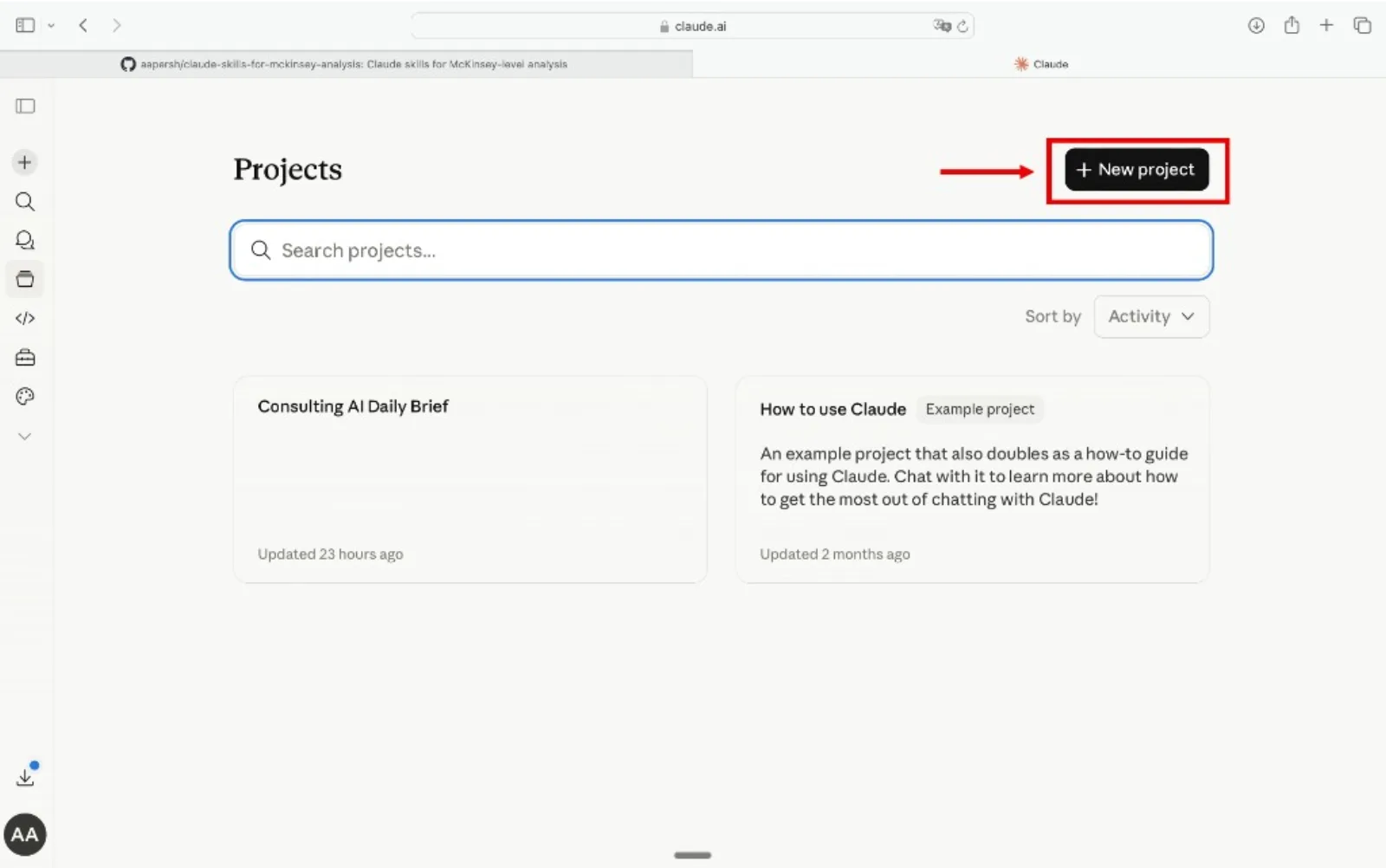
Go to claude.ai, open the left sidebar, click Projects, then Create Project. Name it something like "Board Pack" or "Board Reporting" so you can reuse it each cycle.
Add the skills as Project Knowledge
Inside your project, open Project Knowledge, click Add Content, and upload the .md files. Add as many as you want, one skill, one part, or all 12. Claude references them automatically in every conversation inside that project.
Build the board pack
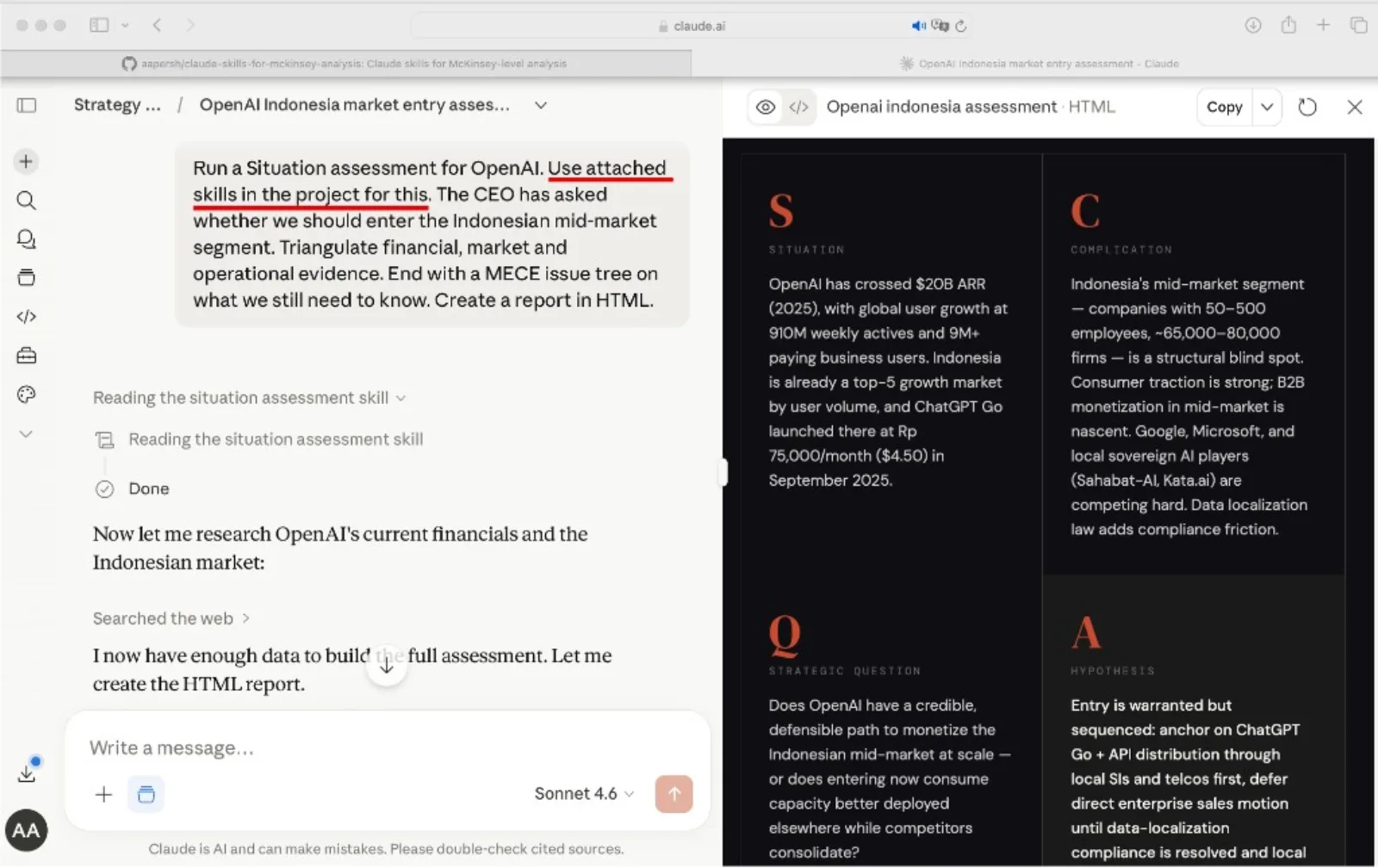
Run the narrative skill first to set the governing thought and page map. Then open a conversation, paste your data, and name the skill for the page you are building. Claude reads the method and drafts the page with the framework already loaded.
Tip
Refer to the skill by name in your prompt. Phrases like "Use the kpi-scorecard-page skill" or "Run the board-narrative-scqa skill" point Claude at the right method instead of leaving it to guess.
Example prompts
- "Use the board-narrative-scqa skill to set the spine for this quarter's board pack."
- "Use the kpi-scorecard-page skill to build the scorecard from these metrics and targets."
- "Use the risk-and-mitigation-page skill to place these principal risks on a heatmap."
- "Use the decision-and-ask-page skill to turn this recommendation into a votable ask."
How to choose a skill
Each skill maps to one page of the board pack. Pick the row that matches the page you are building and use that skill. For the wider workflow, see our Claude skills for strategy.
The quality bar
Every skill pushes Claude toward output that meets the standard a board chair holds each page to before it goes in the pack.