

The Product Manager's Claude Skill for Shipping-Ready Specs
The product manager's Claude skill in this pack turns a one-line idea into a shipping-ready spec: a structured PRD, developer-ready user stories, the assumptions that could sink the launch, and the rollout plan and metrics you will defend in the review.
What this is
6 Claude skills that turn a rough idea into a spec a developer can build against and a stakeholder can approve. Each skill covers one stage of the write-up: framing the problem, writing the user stories, stress-testing the assumptions, planning the rollout, auditing a spec that already shipped, and preparing the metrics defense for the review.
Load all six for a full spec cycle from idea to launch review, or pull the one skill you need for whatever stage you are stuck at today. None of them replace product judgment. They replace the blank doc and the missing structure that makes a review run long.
For the write-up that follows the spec, see Claude skills for executive summary writing. For the upstream framing work before you write the PRD, see Claude skills for strategy professionals.
Download all 6 skills
One zip, one folder per skill. Free, no signup.
The 6 Claude skills for product managers
Each skill targets one stage of the spec, from the first line to the launch review. The first two build the spec. The middle two stress-test it. The last two look backward and forward from the launch.
6 Claude skills for shipping-ready specs
Skill 1
One-Line-to-PRD Structuring
Turns a single sentence or a half-written note into a structured product requirements document. Names the problem before the solution, draws an explicit scope boundary, and ties every proposed feature back to a metric a reviewer can check.
one-line-to-prd-structuring
Use when: You have a one-line idea, a Slack message, or a half-written doc and need a structured PRD before the next planning cycle
Output: PRD with problem statement, target user, in-scope and out-of-scope boundaries, 3 to 5 success metrics, and an open questions list
Skill 2
User Story & Acceptance Criteria Drafting
Converts PRD scope into user stories a developer can actually estimate. Each story gets Given/When/Then acceptance criteria, plus the edge cases and error states that get skipped when a spec is written from memory instead of the scope.
user-story-acceptance-criteria-drafting
Use when: The PRD is approved and you need user stories with acceptance criteria a developer can size and build against, before sprint planning
Output: User stories in role-goal-benefit format, Given/When/Then acceptance criteria per story, a separate edge case list, and a sizing note
Skill 3
Assumption Risk Flagging
Reads the spec and pulls out every assumption buried in the plan: user behavior, market size, technical feasibility, adoption curve. Ranks each by how much the launch depends on it and how little evidence currently backs it up.
assumption-risk-flagging
Use when: You have a draft spec and need to know which assumptions are load-bearing before you commit engineering time to build against them
Output: Assumption inventory ranked by impact and confidence, a top-5 shortlist of the riskiest assumptions, and a lightweight test for each one
Skill 4
Rollout & Risk Planning
Drafts the rollout sequence from pilot cohort to general availability, with a go or no-go gate at each phase. Builds the risk register that pairs each risk with a mitigation, and states the metrics you will need to defend in the review.
rollout-risk-planning
Use when: The spec is close to final and you need a phased rollout plan, a risk register, and the metrics you will defend before the launch review
Output: Phased rollout plan with a go or no-go gate per phase, a risk register with likelihood and mitigation, and metric targets with a check-in cadence
Skill 5
Spec Gap Audit
Runs a shipped or past spec back through the same structure the first skill builds forward, and flags where the original document was thin: an untested assumption that turned out false, a metric that was never defined, a scope line that shifted mid-build.
spec-gap-audit
Use when: A feature already shipped and underperformed, and you want to find the gaps the original spec missed before the pattern repeats on the next one
Output: Gap inventory across problem framing, scope, and success metrics, a root cause per gap, and a rewrite of the section that would have caught it
Skill 6
Metrics Defense Prep
Takes the success metrics from the spec and builds the brief that survives a skeptical review. Pairs each metric with its definition, its leading indicator, and the strongest counterargument a stakeholder is likely to raise.
metrics-defense-prep
Use when: You are heading into a launch review or a quarterly business review and need to defend the metrics in the spec against the questions a stakeholder will ask
Output: Metric-by-metric defense brief with the definition, the target, the leading indicator, and the counterargument each metric is most likely to face
Setup Guide
- Step 1Download all 6 skills (.zip)
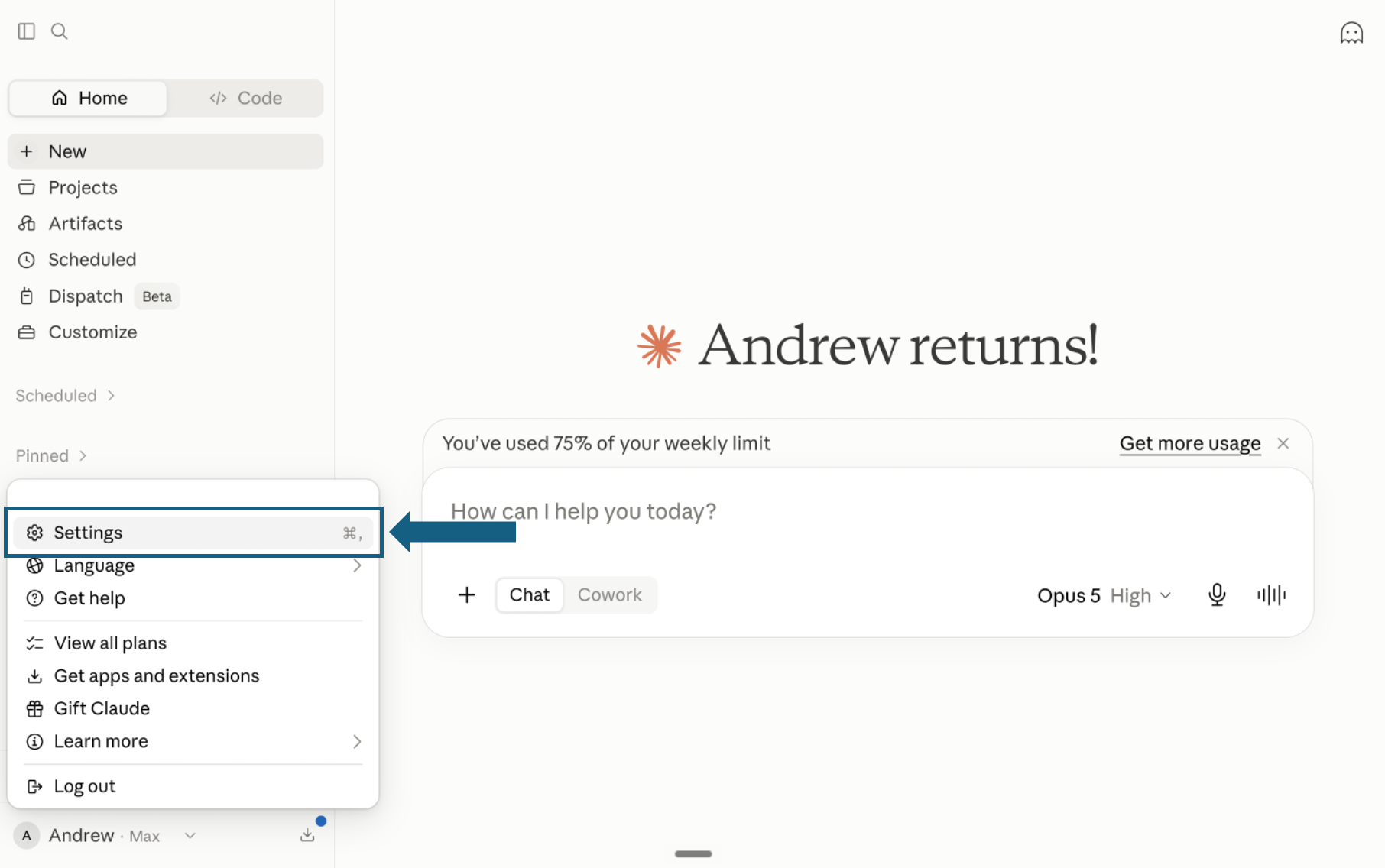
Download the pack and open Settings
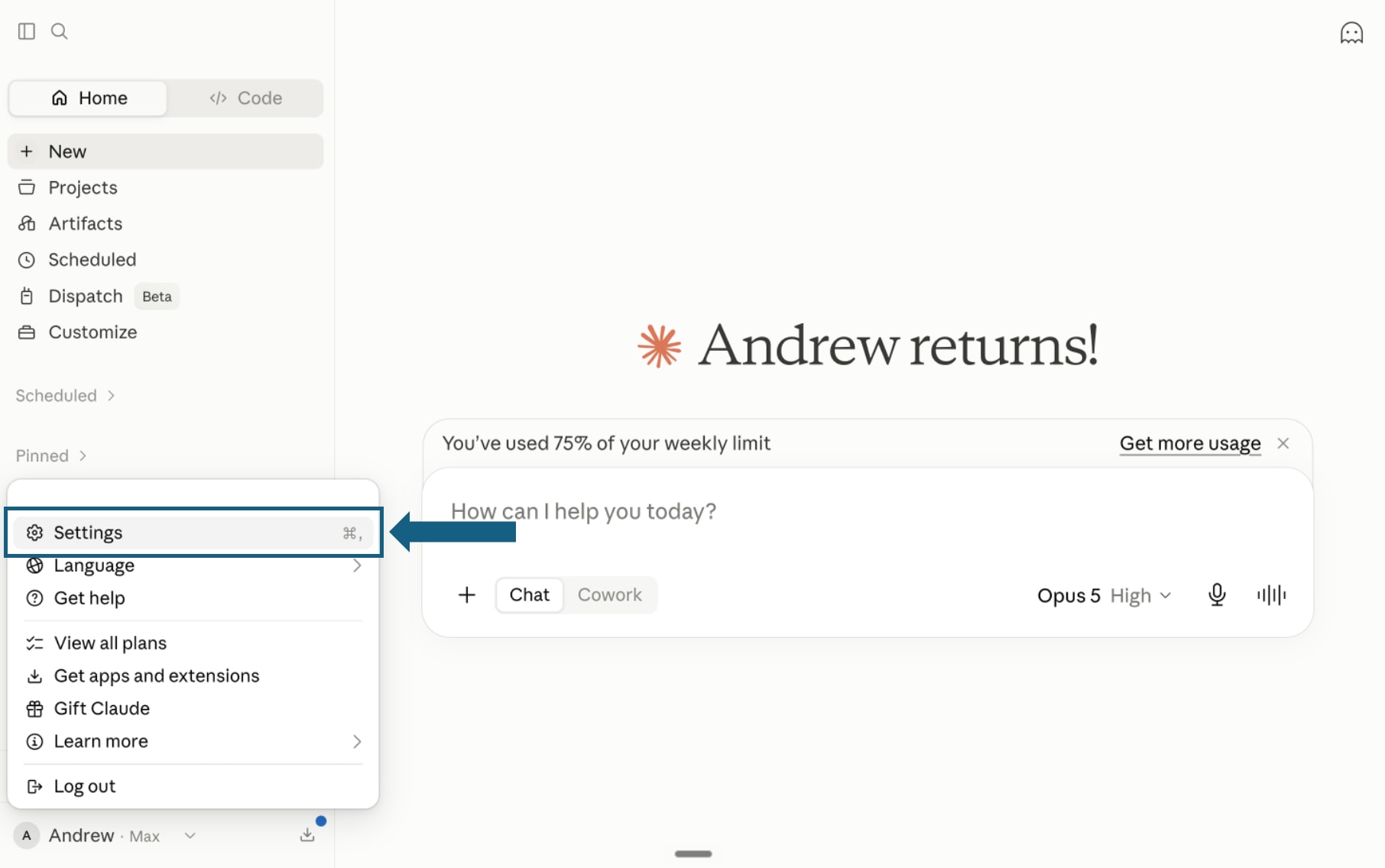
Download and unzip the pack so each skill remains in its own folder with its SKILL.md file. In Claude, open your profile menu and select Settings.
Open the screenshot to view it full size. - Step 2
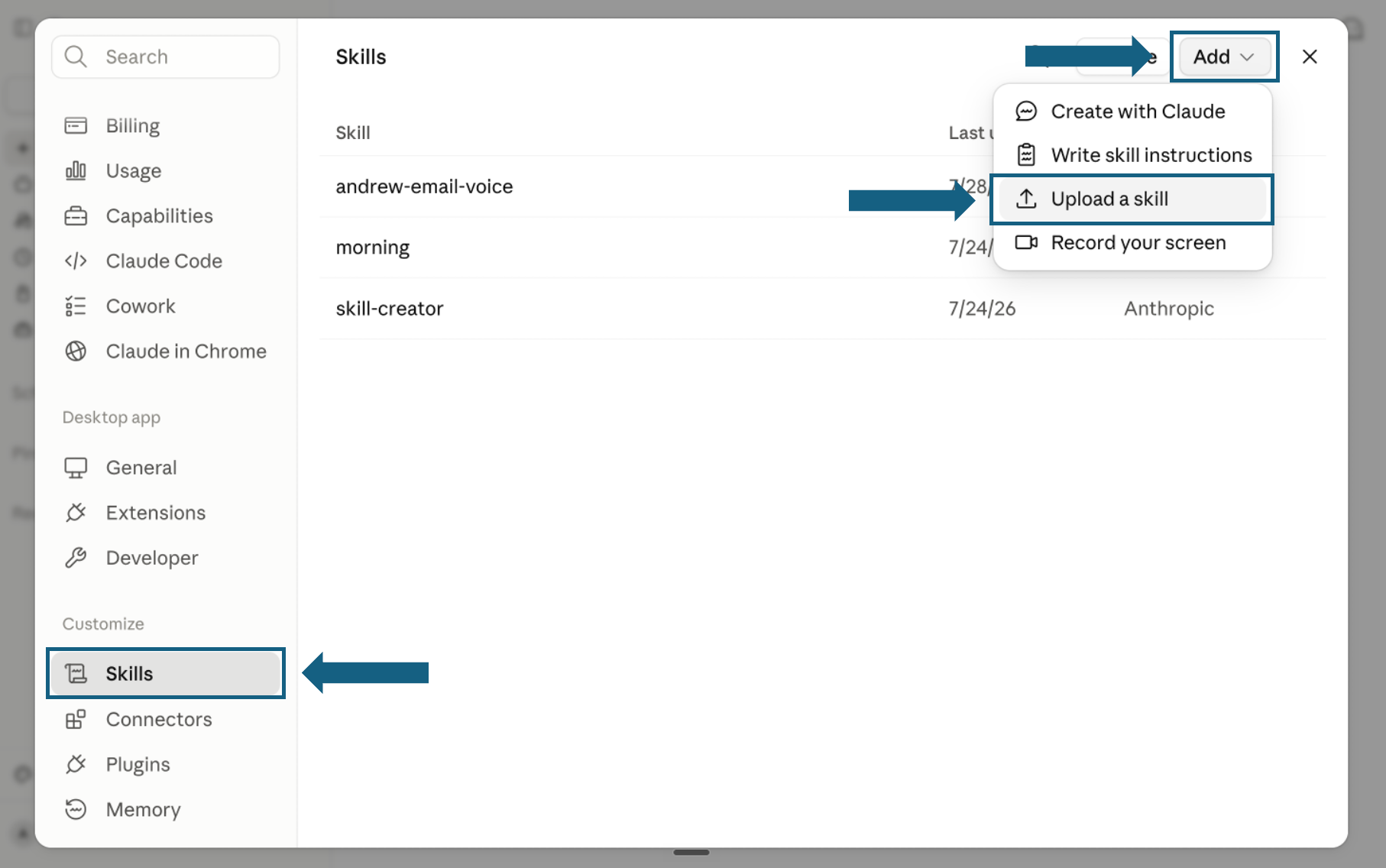
Open Skills and start an upload
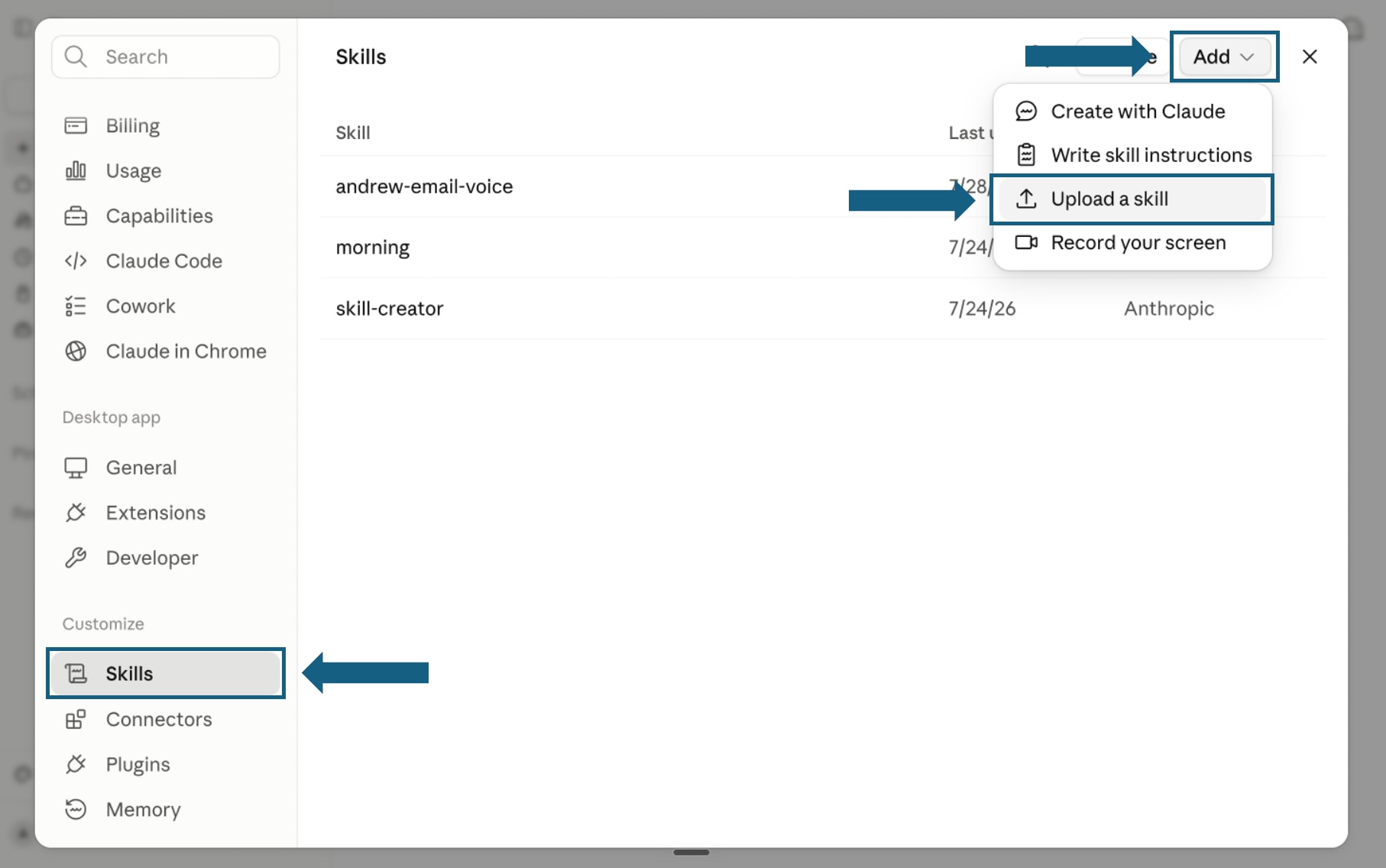
In Settings, select Skills under Customize. Open Add and choose Upload a skill.
Open the screenshot to view it full size. - Step 3
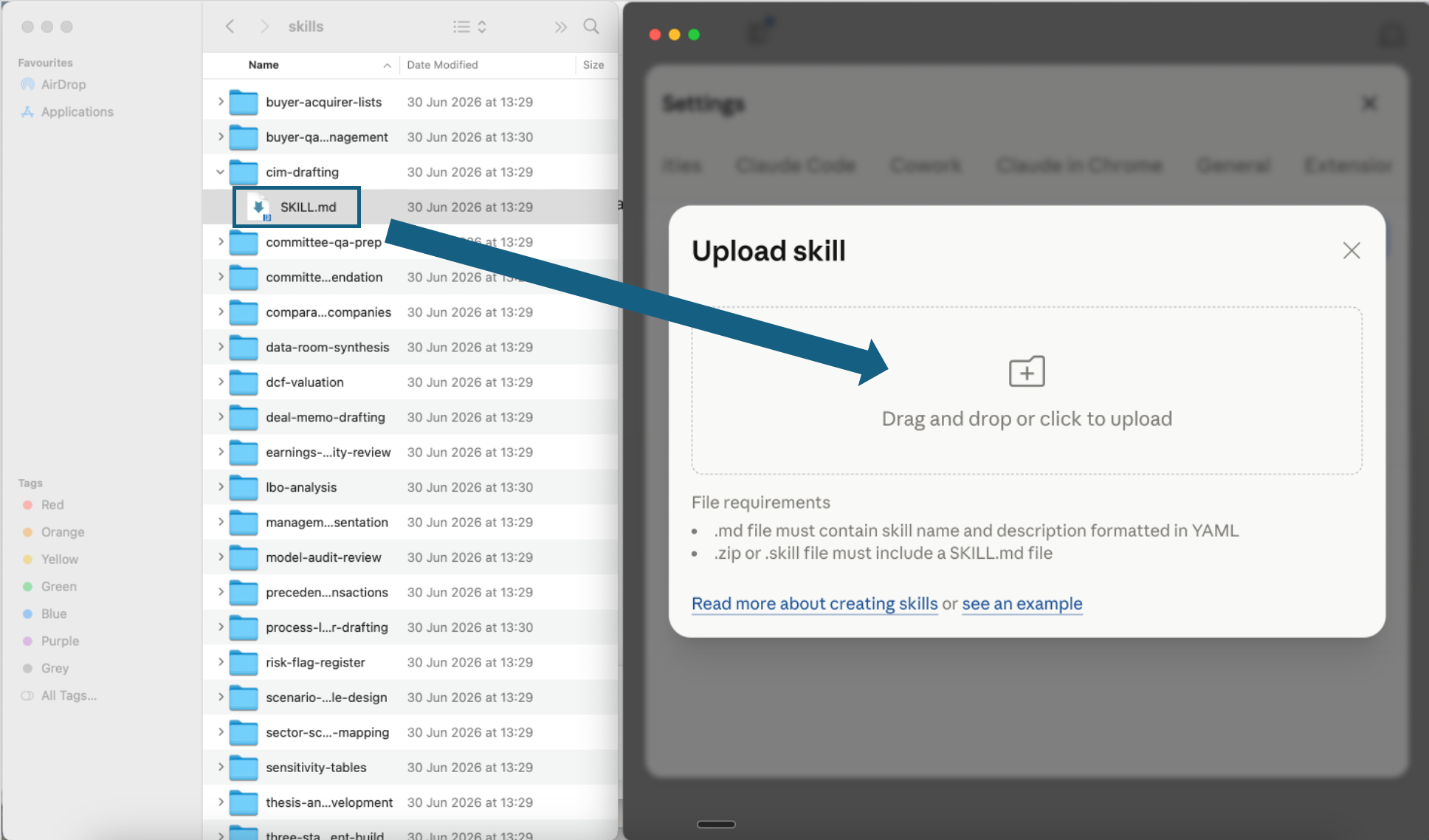
Upload one skill file
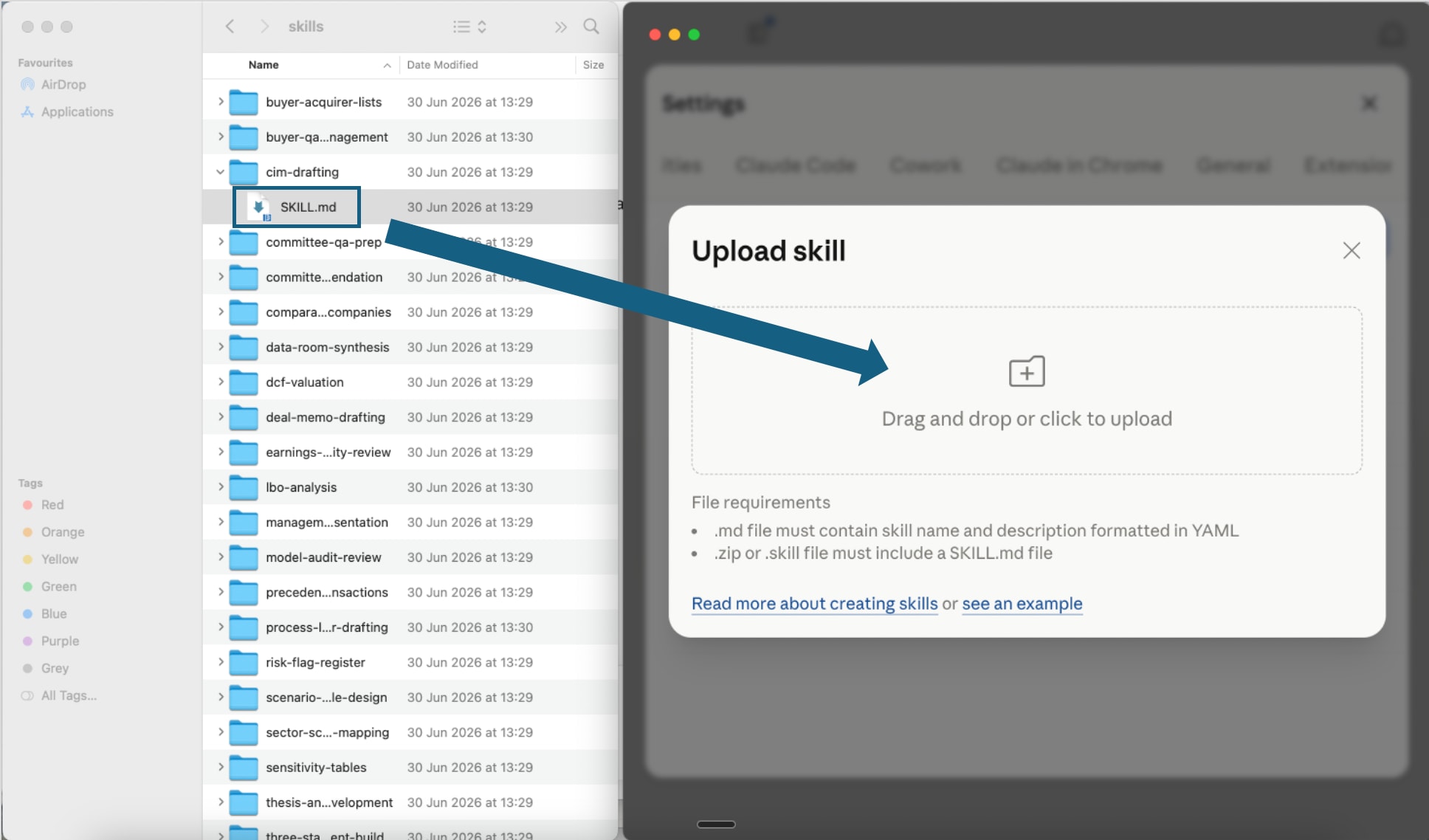
Open one extracted skill folder and drag its SKILL.md file into the upload window, or use the file picker. Repeat for each product-management skill you want to add.
Open the screenshot to view it full size. - Step 4
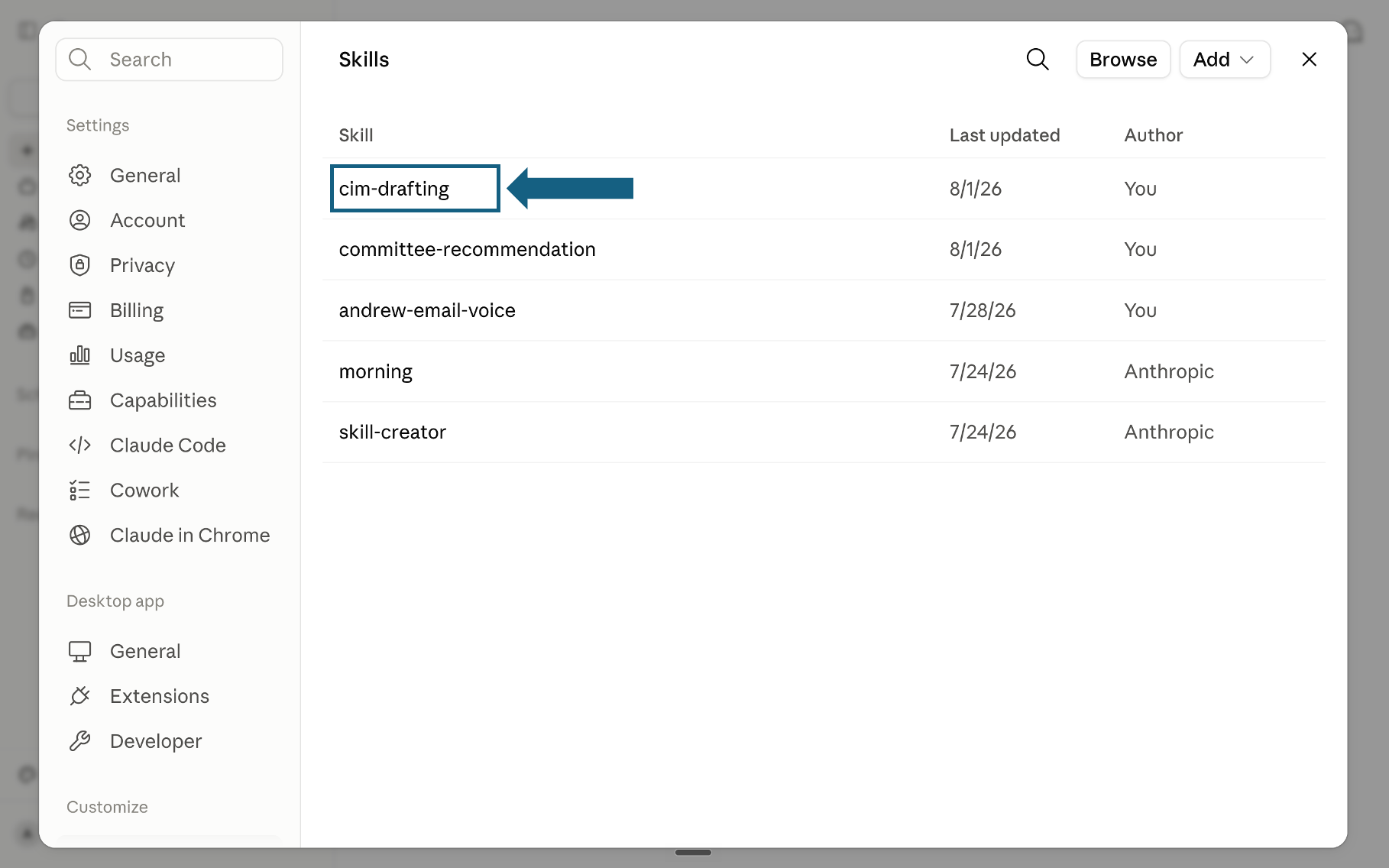
Confirm the skill was added
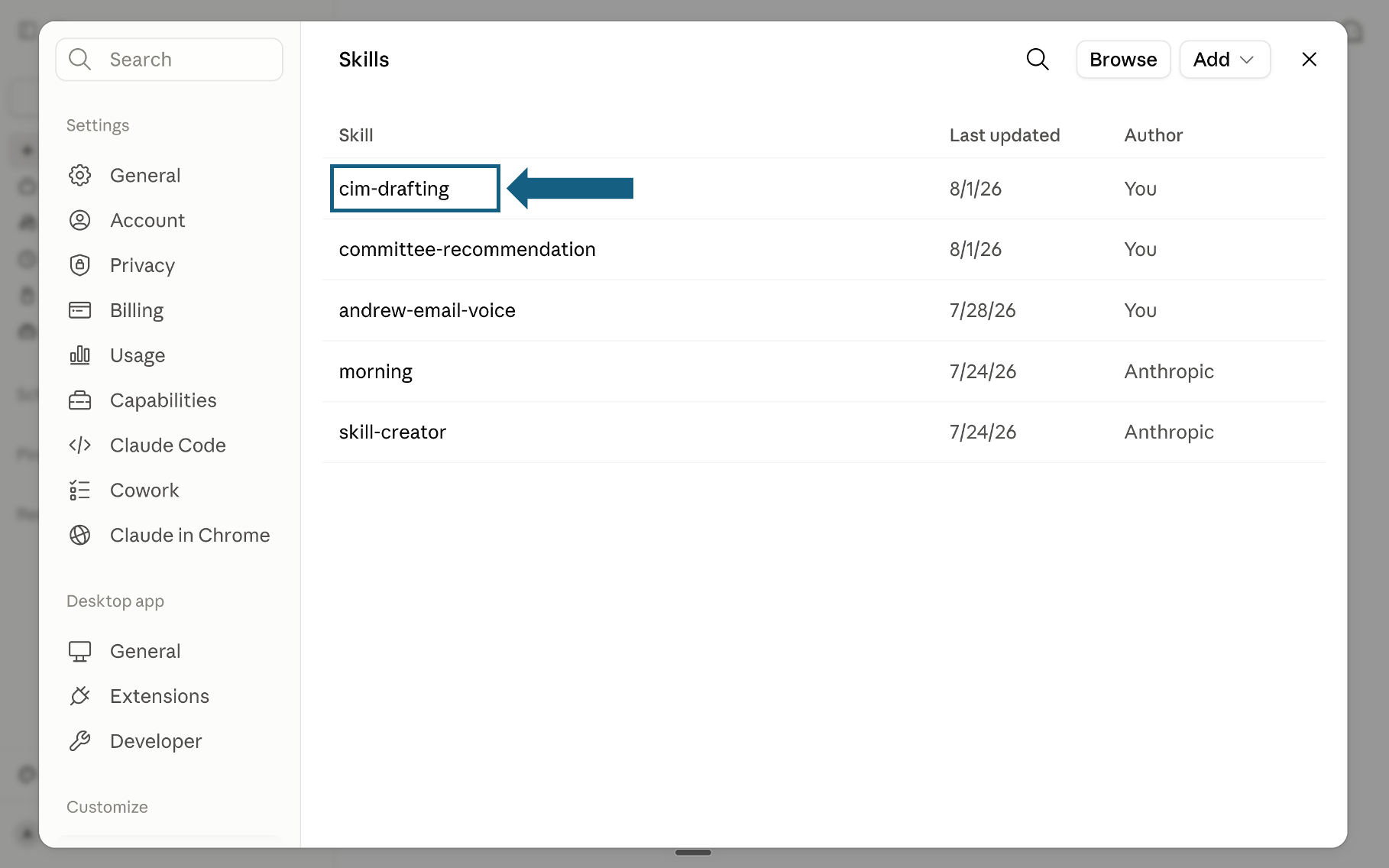
Return to the Skills list and confirm that the uploaded skill appears. Select its name to open it.
Open the screenshot to view it full size. - Step 5
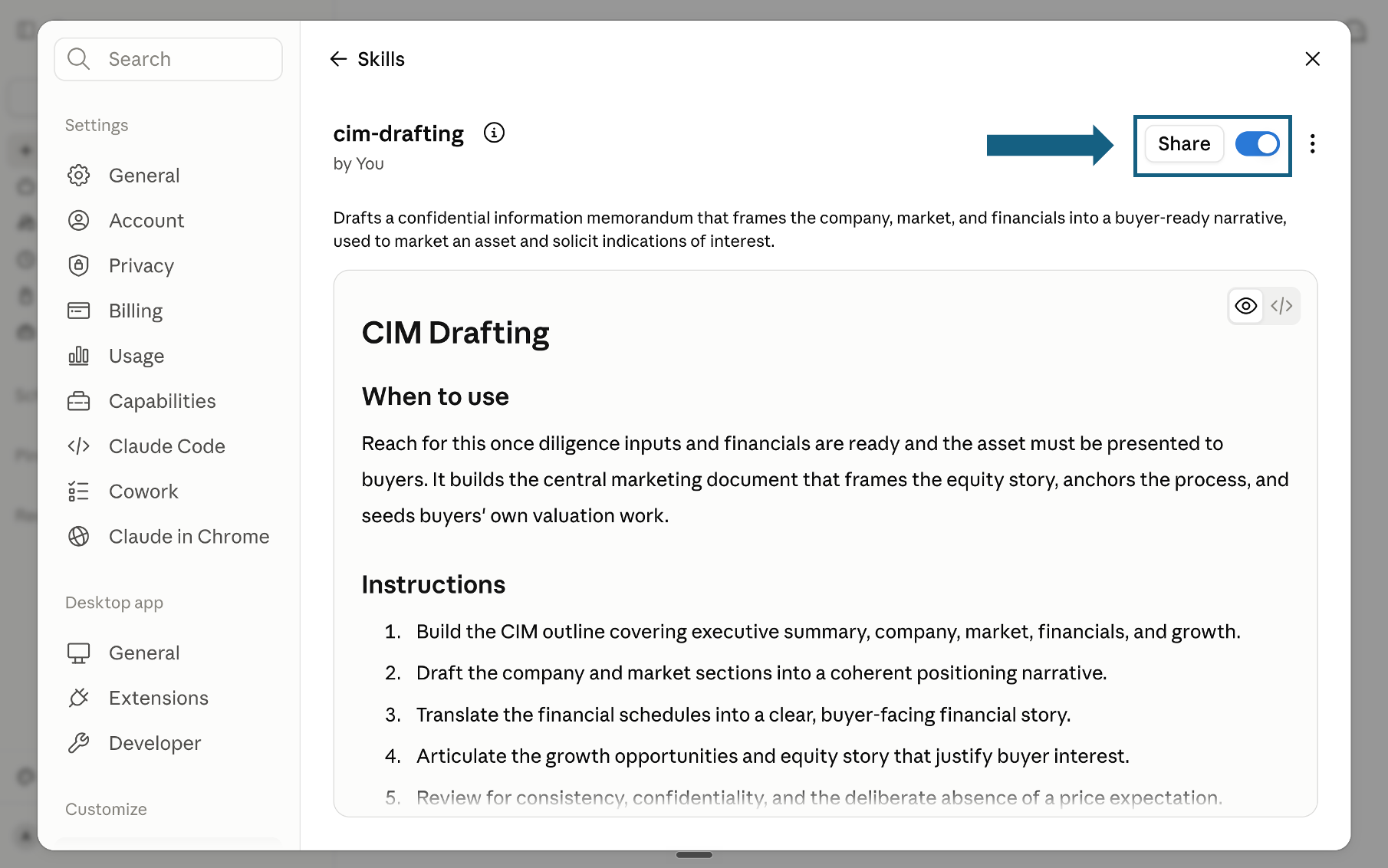
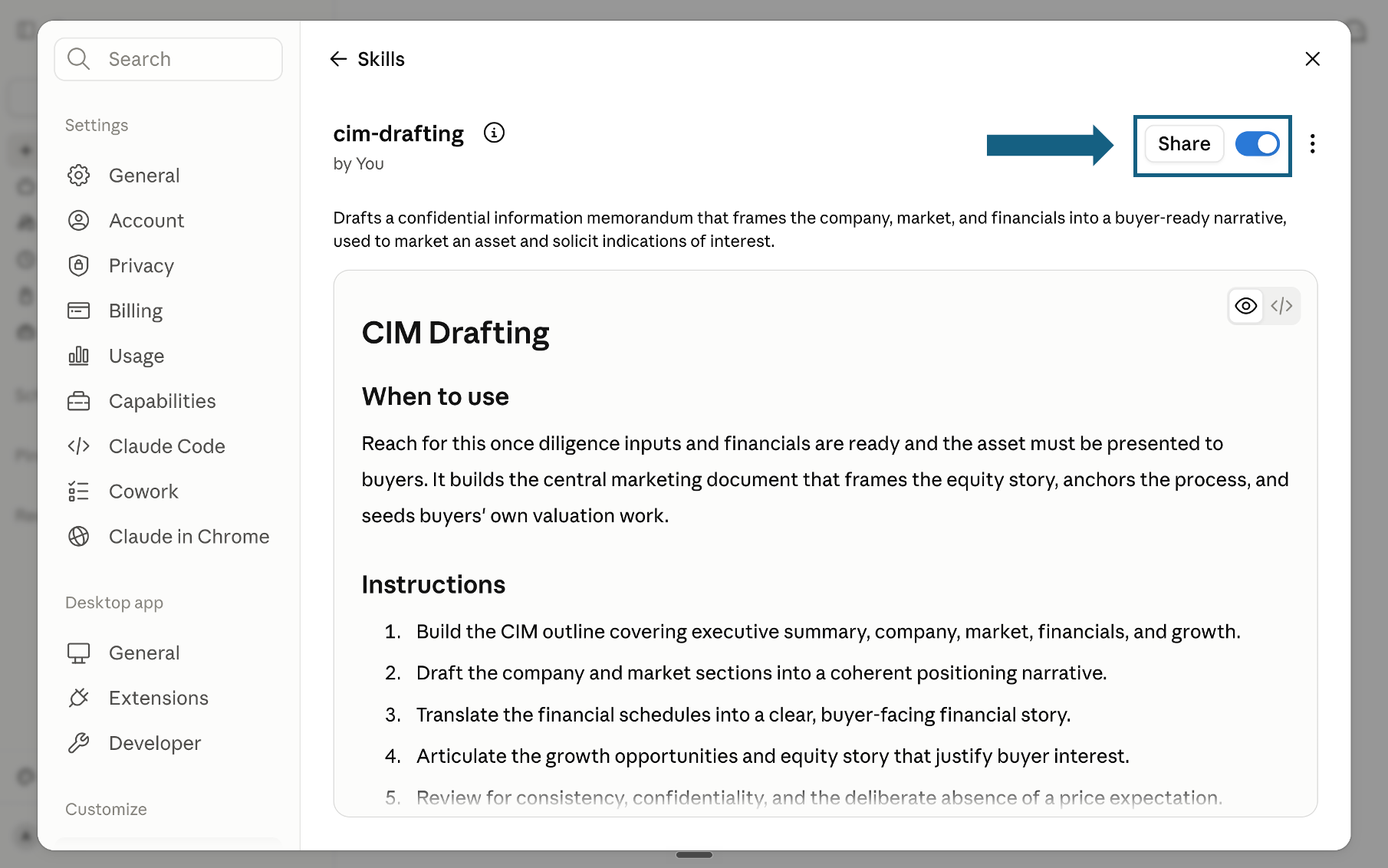
Review and turn on the skill
Review the skill's name, description, and instructions, then confirm its switch is on. Sharing the skill is optional.
Open the screenshot to view it full size.
Try a skill
Tell Claude which skill to use and provide the relevant files or context. Review every output before sharing it.
- "Use the one-line-to-prd-structuring skill to turn this idea into a PRD: [paste idea]. The user is a mid-market sales rep. The stage is early discovery."
- "Run the user-story-acceptance-criteria-drafting skill on this scope and flag any story that is too large to size: [paste scope]."
- "Use the assumption-risk-flagging skill on this spec. We are two weeks from build start: [paste spec]."
- "Run the metrics-defense-prep skill on these success metrics before Thursday's launch review: [paste metrics]."
How to choose a skill
Each skill maps to a specific point in the spec cycle. Match your immediate need to the right skill and upload that one through Claude's Skills settings.
The quality bar
Every skill is designed to push Claude toward a spec that would pass scrutiny in a real planning review, not just produce a plausible-sounding document. The standard is the one a senior product lead would apply before a kickoff.