

Claude skills for digital transformation
18 standalone Claude skills for digital transformation work, grouped into six engagement domains. Each skill is a small, uploadable workflow that teaches Claude how to perform one high-value consulting task with a repeatable, named method.
Together, they cover a full digital transformation engagement: assess the current state, set strategy, design the organization, make the technology decisions, structure delivery, and communicate the recommendation to the board. Built for consultants, transformation leads, and strategy professionals who want Claude to work closer to a senior engagement manager, structured before verbose, evidence-aware before opinionated, and decision-ready before exhaustive.
Each skill is one folder with a SKILL.md file. Install the domains relevant to your current engagement or load the full set.
Download all 18 skills
One zip, one folder per skill. Free, no signup.
The 18 Skills You Get
Six domains, three skills each. They follow the sequence of a real engagement: assess first, communicate last. Every skill also works on its own for a targeted task.
The digital transformation AI toolkit
Domain 1 · 3 skills
Assessment and Diagnosis
Use these at the start of an engagement to establish the fact base. They answer where the client stands before any direction is set, covering maturity, portfolio health, and organizational readiness.
Digital Maturity Assessment
Use when: You need a structured fact base on where the client sits across technology, data, talent, and culture before setting ambitions
Output: Five-domain maturity profile, gap narrative, and top three priority findings
Technology Landscape Audit
Use when: You need to understand what the client owns before deciding what to build, buy, or retire
Output: Application portfolio map with TIME labels, redundancy register, gap list, and rationalization priority list
Transformation Readiness Check
Use when: Leadership ambitions outpace what you observe on the ground, or a previous transformation stalled without a diagnosed root cause
Output: Six-dimension readiness scorecard, red flags, precondition recommendations, and overall readiness verdict
Domain 2 · 3 skills
Strategy and Vision
Use these to move from a vague digital ambition to a concrete, defensible strategy with bounded choices. They produce the transformation thesis, the investment case, and the prioritized list of where to play.
Digital Strategy Framing
Use when: The client needs to move from 'we need to be more digital' to a strategy with real choices and priorities
Output: Transformation thesis, ambition statement, three-horizon where-to-play choices, and critical bets
Use Case Prioritization
Use when: A long list of digital ideas needs to be ranked and sequenced before the roadmap can be built
Output: Scored use case register, 2x2 prioritization matrix, three-wave plan, and top-10 rationale memo
Digital Business Case Builder
Use when: An initiative needs a business case to survive CFO or board scrutiny, or an existing case is too optimistic
Output: Strategic rationale, quantified benefit register with driver logic, cost estimate, NPV and payback for three scenarios, and risk-adjusted recommendation
Domain 3 · 3 skills
Organization and Change
Use these to design how the organization will execute and sustain digital capability, and to prepare people for the change. Strategy without an operating model and a change plan stalls in execution.
Digital Operating Model Design
Use when: The client has a digital strategy but no plan for how the organization will deliver and sustain it
Output: Recommended organizational archetype with rationale, governance and decision rights matrix, ways of working blueprint, and transition plan
Capability Gap Analysis
Use when: The team is underestimating the capability investment required, or strategy assumptions about talent and process are vague
Output: Capability requirements by pillar, gap register with human/process/technology breakdown, build/buy/partner options, and capability roadmap
Change Management Planner
Use when: A technology or process plan exists but there is no corresponding plan for how people will be prepared and supported
Output: Change impact heat map, stakeholder engagement plan, communication calendar, capability building plan, and adoption metrics
Domain 4 · 3 skills
Technology and Architecture
Use these to design the technology decisions that underpin the transformation. They address the three most consequential technical choices in any digital program: what to retire, how to handle data, and how to move to cloud.
Tech Stack Rationalization
Use when: Technical debt or overlapping systems have been identified and the client needs a sequenced plan to address them without disrupting operations
Output: Retirement plan, consolidation plan with migration approach, modernization approach for load-bearing systems, dependency sequence, and 18-month roadmap
Data Strategy Framing
Use when: Multiple digital use cases depend on data that does not exist in a usable form, or a previous data lake investment delivered no value
Output: Data ambition statements, critical data asset register with gap assessment, governance model, analytics maturity targets, and data capability roadmap
Cloud Migration Roadmap
Use when: The client has decided to move to cloud and needs a migration sequence, not a vendor pitch
Output: Workload classification by migration approach (6 Rs), dependency map, wave plan, risk register, and landing zone checklist
Domain 5 · 3 skills
Delivery and Measurement
Use these to structure how the program is governed, how delivery begins, and how value is tracked. They prevent the most common failure modes: poor governance, rushed delivery foundations, and activity metrics that do not demonstrate business value.
Program Structure Design
Use when: A transformation program is being set up and needs a governance structure, or an existing program is stalling because decision rights are unclear
Output: Three-tier governance structure, RACI for top 12 decisions, cadence calendar, escalation protocol, and program structure charter
Sprint Zero Planner
Use when: A program is rushing to start building before the environment, team, and standards are ready
Output: Six-track Sprint Zero plan, roles and access checklist, architecture decision record list, backlog readiness checklist, and Sprint Zero calendar
KPI and Value Tracking
Use when: The program lacks a measurement system or reported metrics are activity metrics rather than outcome metrics
Output: Program outcome statements, three-level KPI hierarchy, measurement methodology, value tracking cadence, and quarterly value realization report template
Domain 6 · 3 skills
Communication and Alignment
Use these to build alignment before decisions are made. They cover the executive narrative, stakeholder resistance, and the board presentation that determines whether the program gets funded and stays funded.
Digital Narrative Builder
Use when: The transformation story must land in a leadership meeting and the current version reads like a technology briefing rather than a business case
Output: SCQA narrative spine, Pyramid structure with key messages, hostile Q&A with five responses, and 60-second opening draft
Stakeholder Resistance Mapper
Use when: Specific leaders are creating friction but the team does not have a clear view of why, or generic communication is not working
Output: Stakeholder map with stances, resistance diagnosis by type, targeted engagement plan, coalition design, and 30-day engagement priority list
Board Deck Framer
Use when: The transformation is going to the board for approval and the team needs a presentation architecture designed for a board decision, not a project update
Output: Slide-by-slide architecture for a 10-11 slide board deck, appendix structure, pre-briefing plan, decision statement, and opening paragraph draft
Domains 1-2 establish the fact base and strategy. Domains 3-4 design the organization and technology. Domains 5-6 structure delivery and build the alignment needed to sustain the program.
Setup Guide
- Step 1Download from GitHub
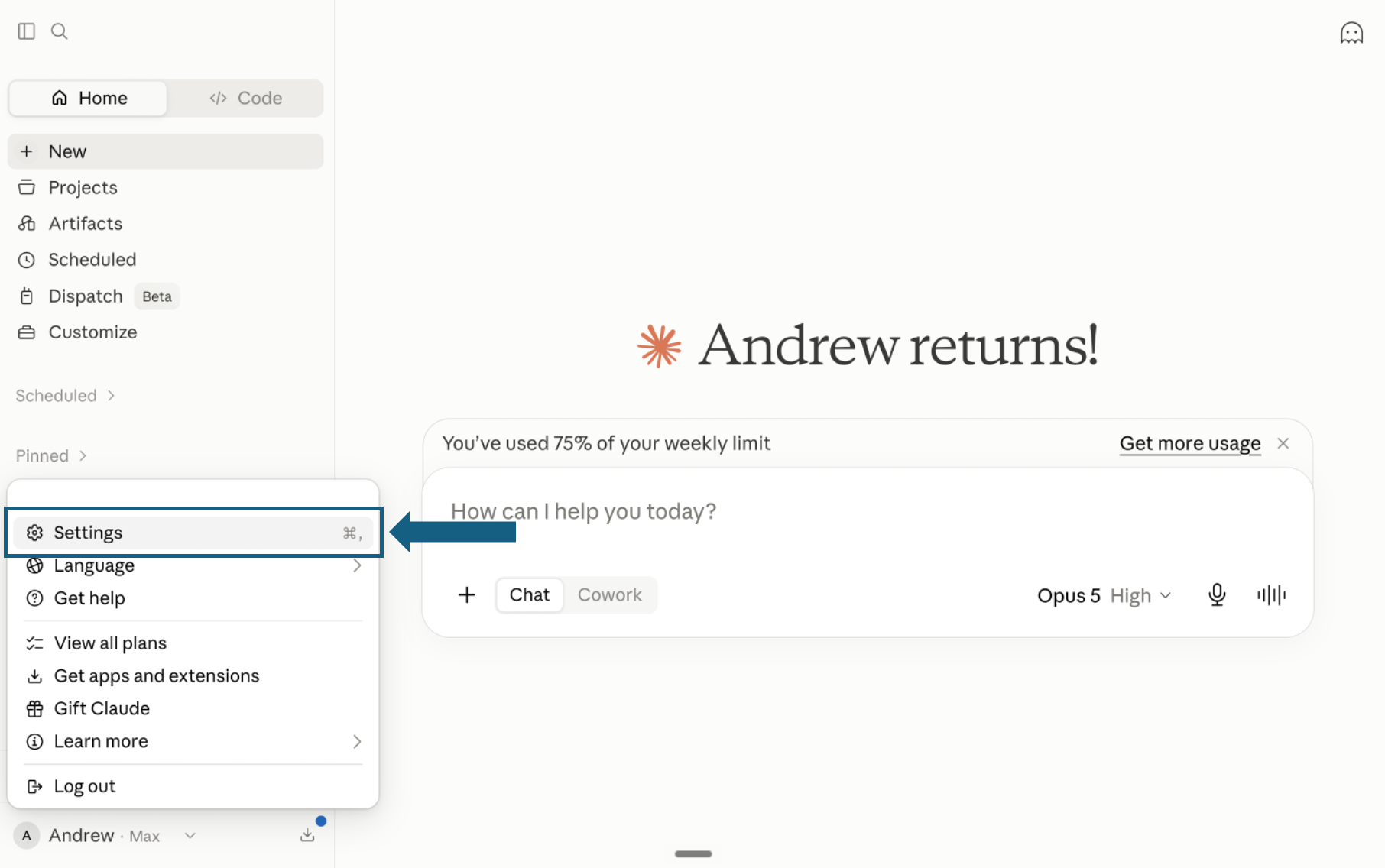
Download the pack and open Settings
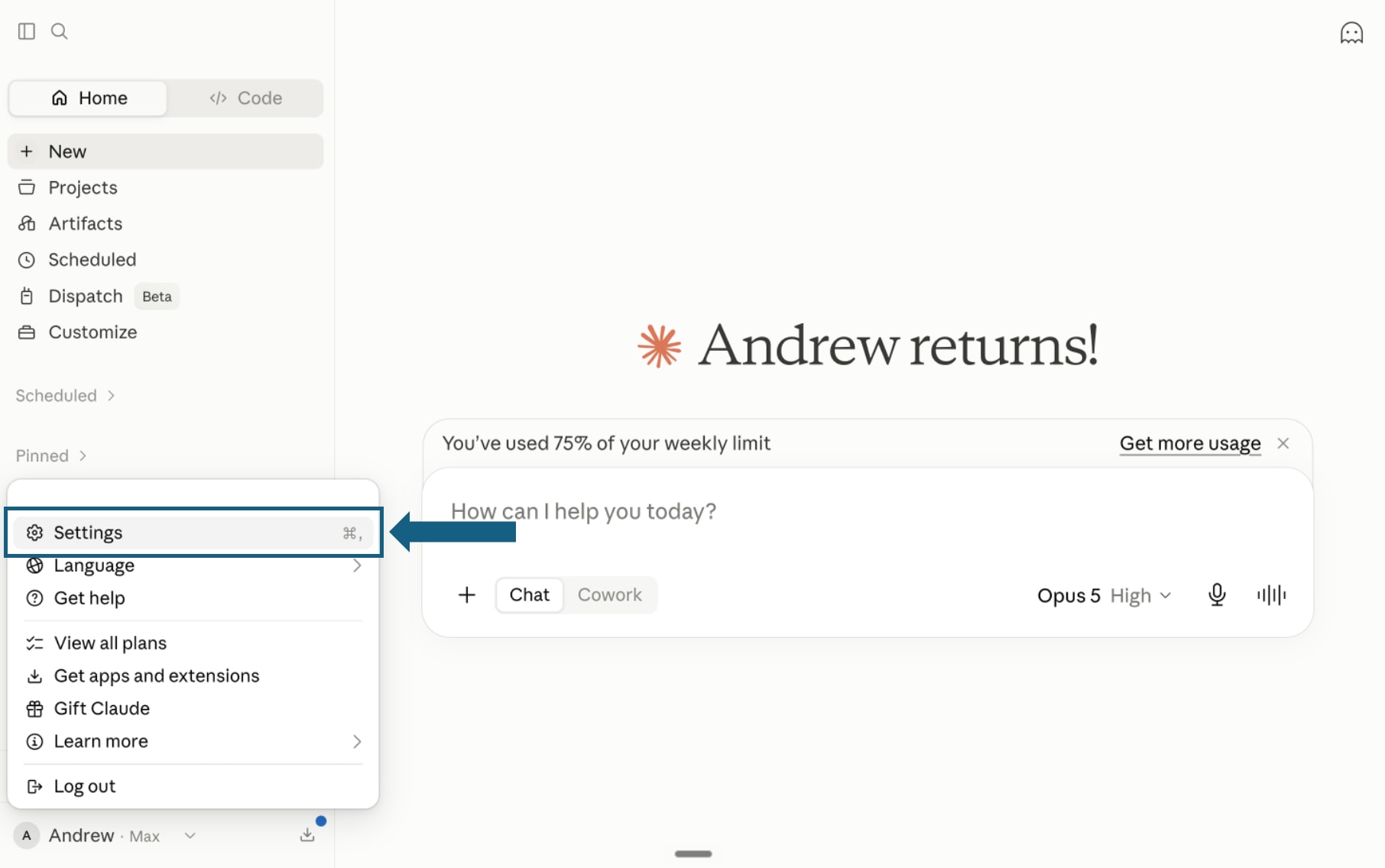
Download the pack and unzip it so each skill remains in its own folder with its SKILL.md file. In Claude, open your profile menu and select Settings.
Open the screenshot to view it full size. - Step 2
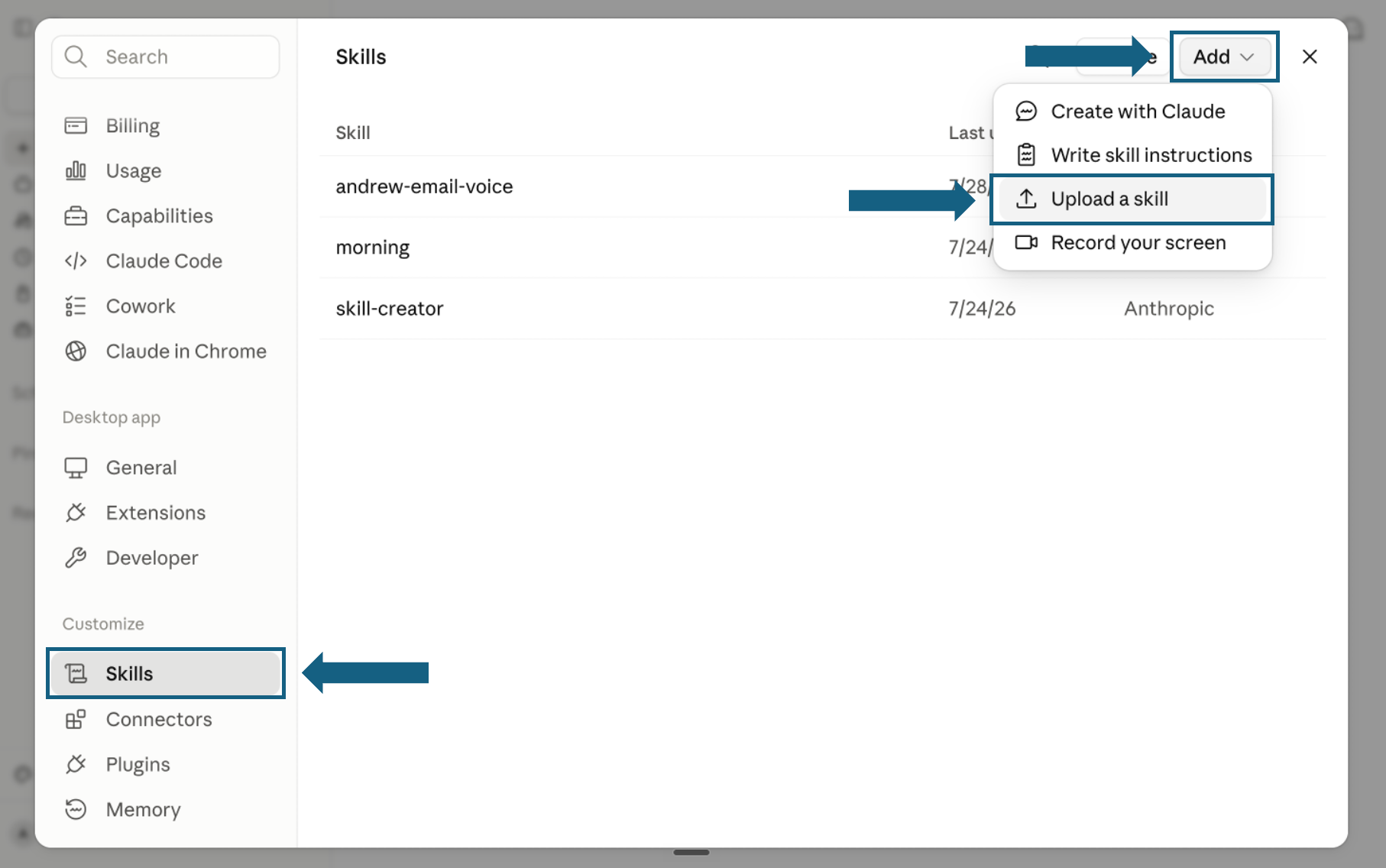
Open Skills and start an upload
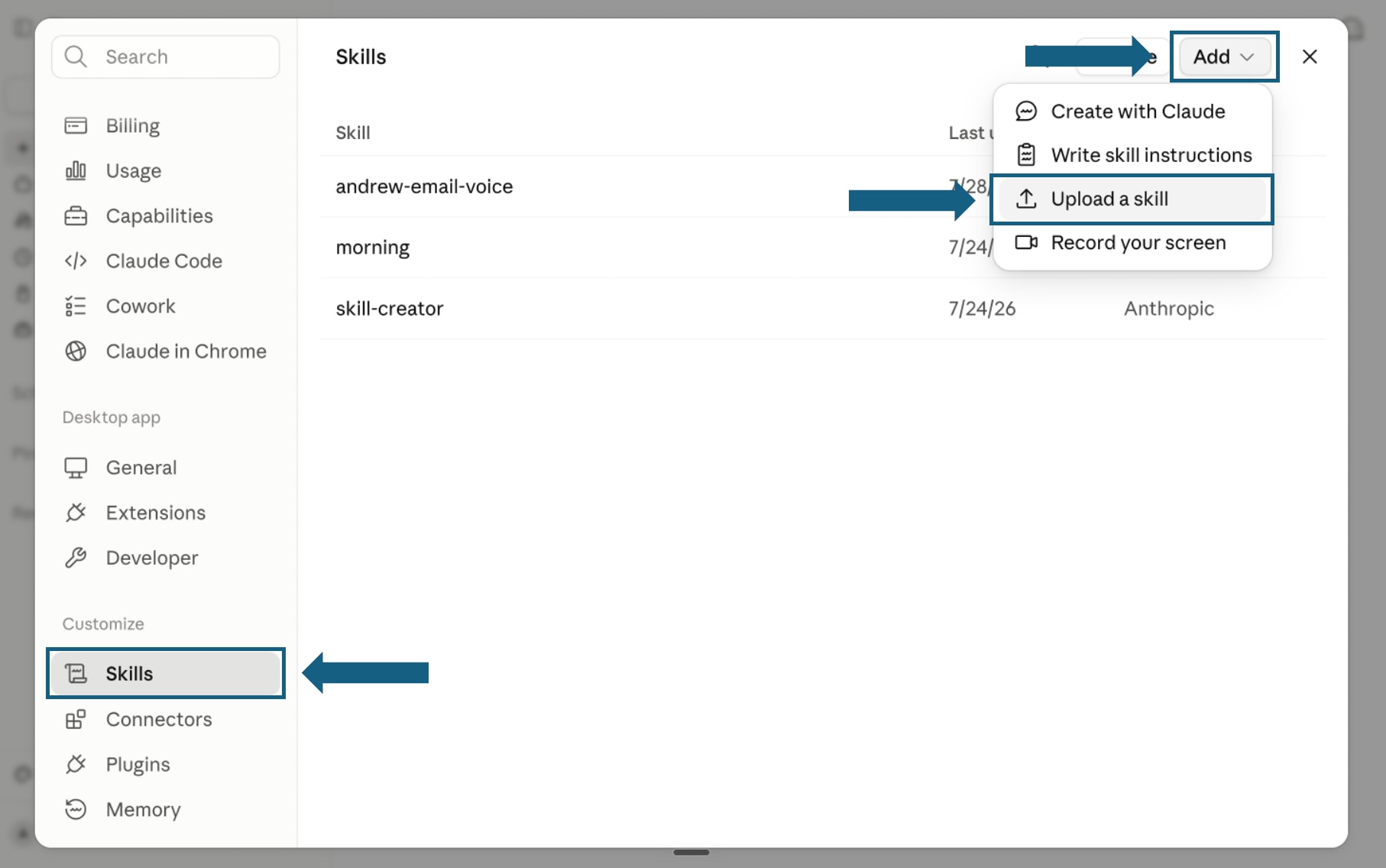
In Settings, select Skills under Customize. Open Add and choose Upload a skill.
Open the screenshot to view it full size. - Step 3
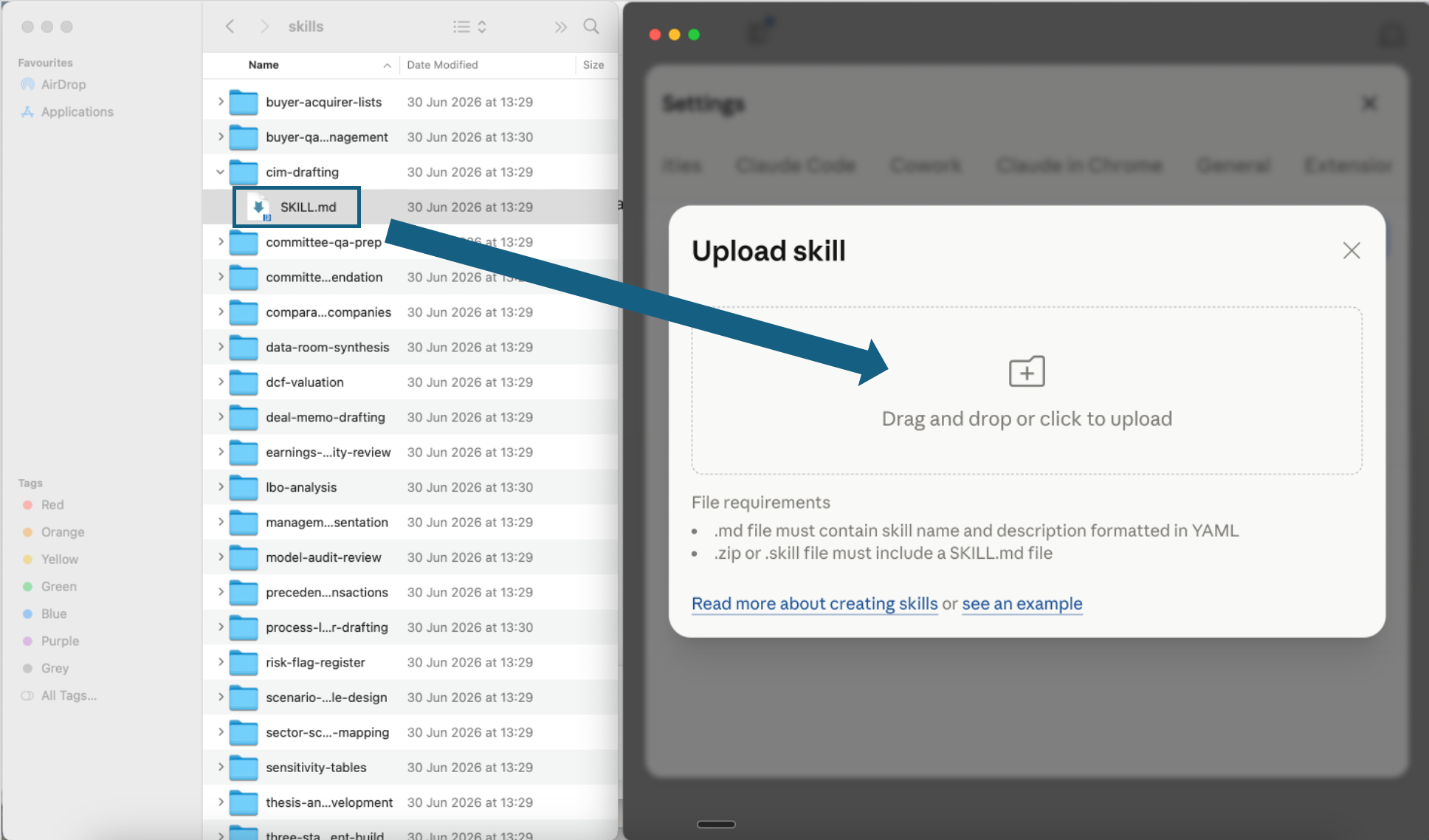
Upload one skill file
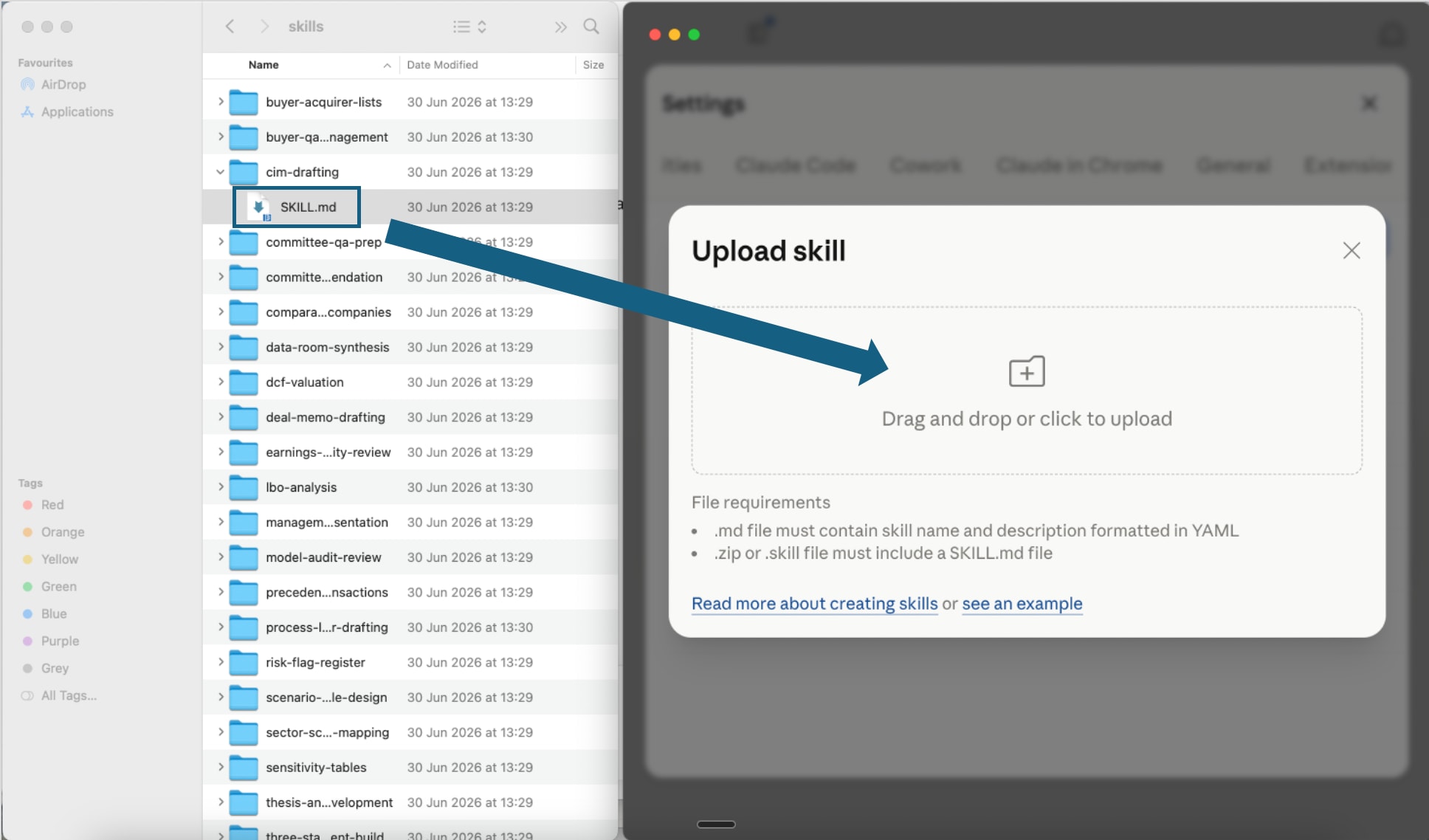
Open one extracted skill folder and drag its SKILL.md file into the upload window, or click the upload area to choose it. Repeat this step for each digital transformation skill you want to add.
Open the screenshot to view it full size. - Step 4
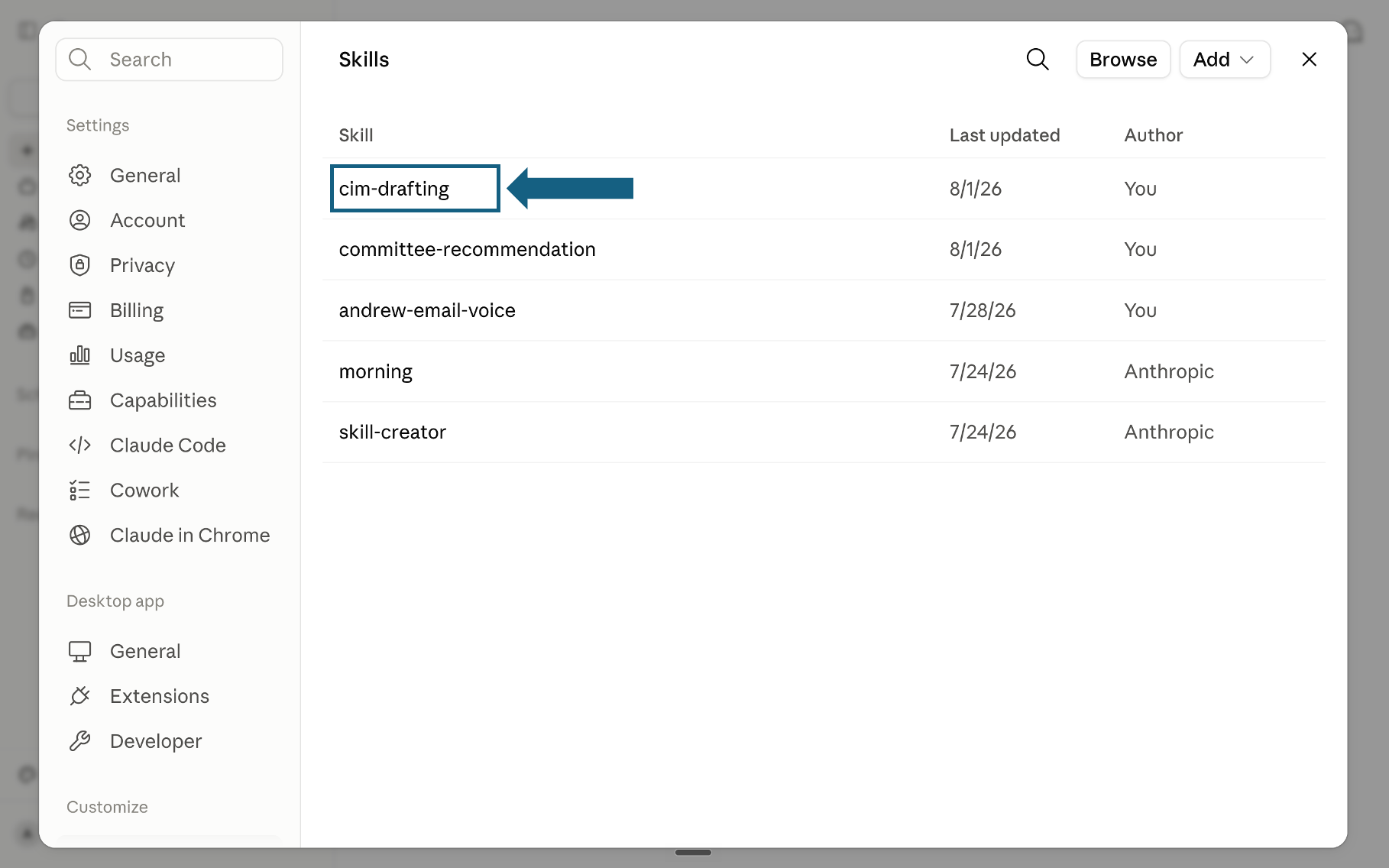
Confirm the skill was added
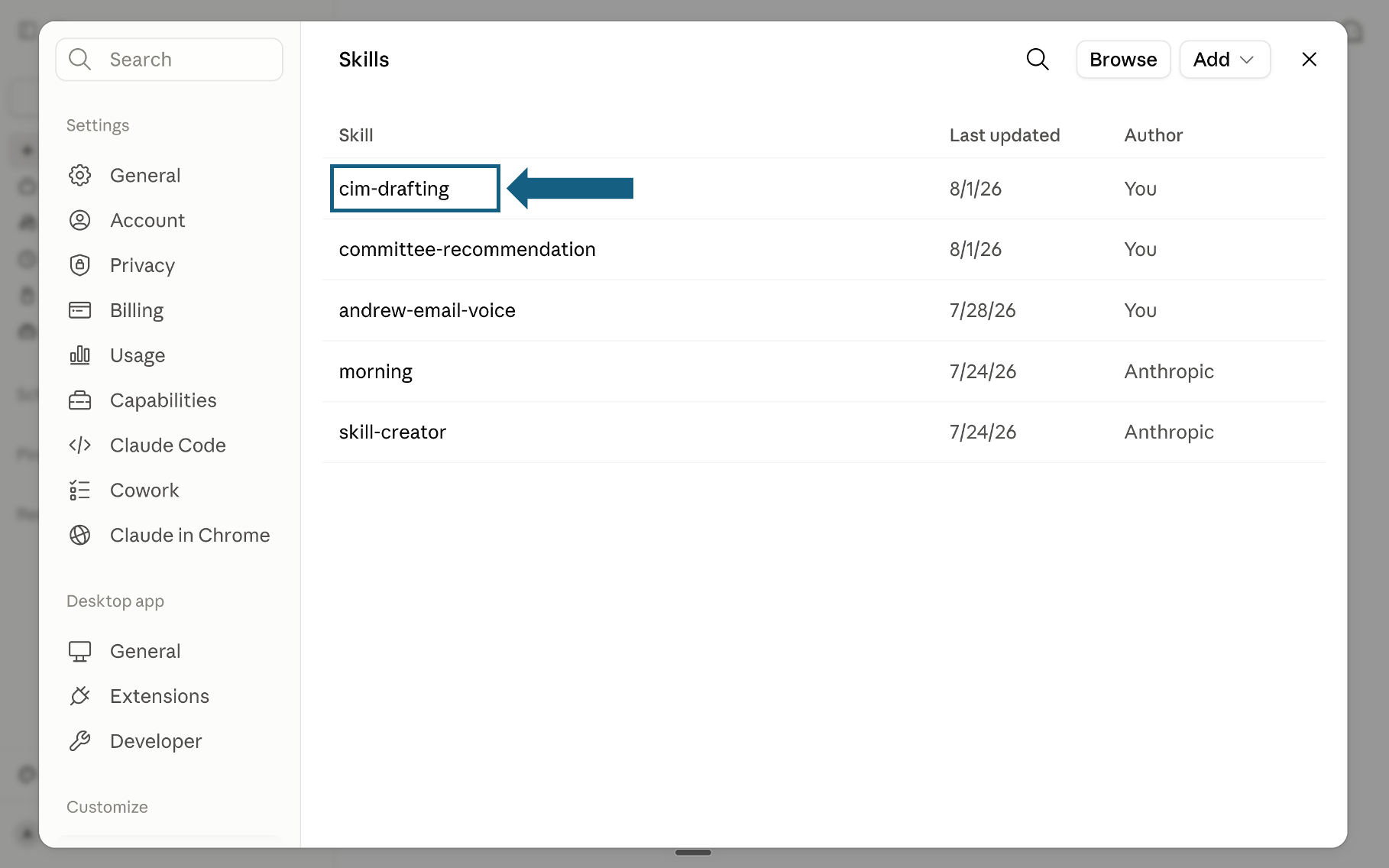
Return to the Skills list and check that the skill appears. Select its name to open it.
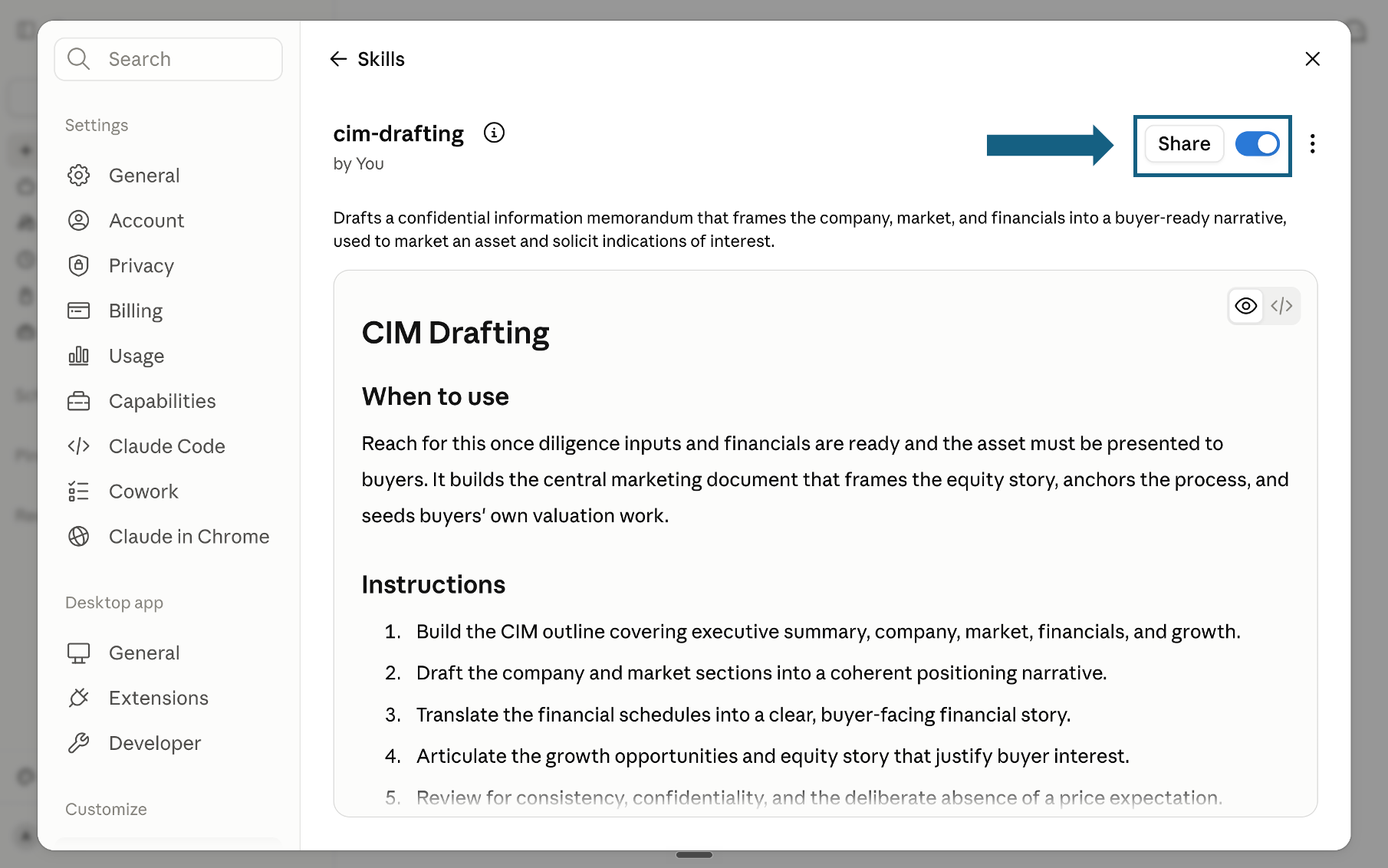
Open the screenshot to view it full size. - Step 5
Review and turn on the skill
Review the skill's name, description, and instructions, then make sure the switch beside Share is on. A blue switch means the skill is turned on; sharing it is optional.
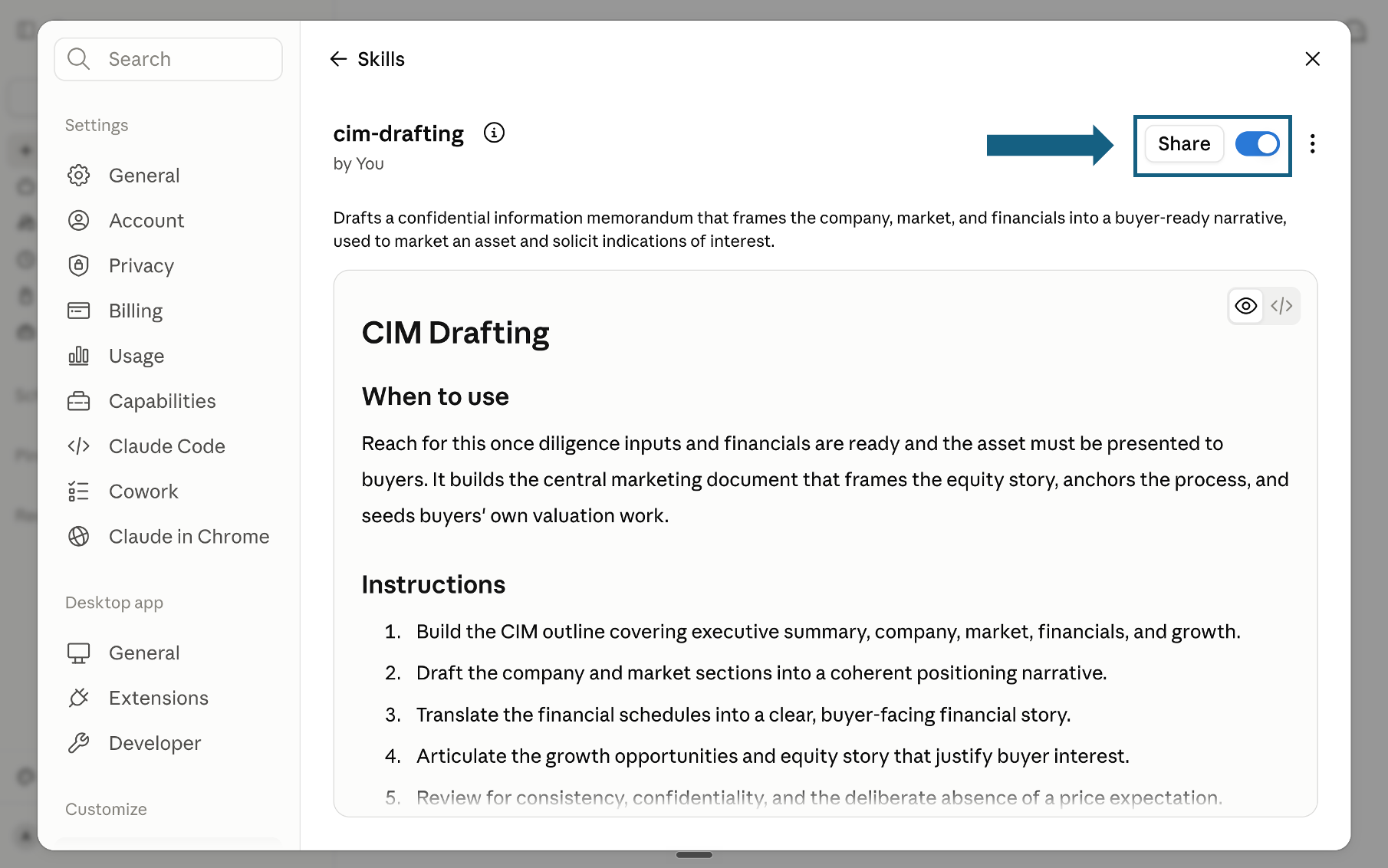
Open the screenshot to view it full size.
Try a skill
Tell Claude which skill to use and provide the relevant files or context. Review every output before sharing it.
- "Use the digital-maturity-assessment skill. Here is what I know about the client: [paste context]."
- "Run the use-case-prioritization skill on this list of 24 ideas from our discovery workshop."
- "Use the board-deck-framer skill. The program is a GBP 90m cloud and data transformation. The board meets in two weeks."
- "Use the stakeholder-resistance-mapper skill. The CFO is blocking the program and we are not sure why."
How to choose a skill
Match your immediate need to the skill. Use the row that fits, not the whole set.
The quality bar
Each skill is designed to push Claude toward outputs a senior engagement manager would be comfortable putting in front of a client. The standard is partner-grade, not analyst-grade: clear choices, explicit logic, no hedging, and a recommendation the reader can act on.