

22 Claude Skills for Operations Efficiency
A complete operations AI system for Claude. 22 standalone skills across six engagement domains: diagnose, find waste, improve processes, redesign structure, govern performance, and lead change.
Independent and unaffiliated. The skills, prompts, and frameworks referenced on this page are not created by, endorsed by, or affiliated with any consulting or financial-services firm whose methods may be referenced here. They are built on publicly available frameworks and ways of working, and are inspired by how such approaches are used to tackle complex business problems.
What this is
22 standalone Claude skills for operations efficiency work, grouped into six domains that mirror how a real engagement runs. Each skill is a structured workflow that teaches Claude how to apply a named, proven operations method: Theory of Constraints, Lean TIMWOODS, SPC control charts, ADKAR, RAPID, and more.
Together, they form a complete operations AI system: diagnose the current state, find the bottlenecks and waste, improve the processes, redesign the structure, build the governance, and lead the change. Built for strategy consultants on operations mandates and in-house operations leaders who want Claude to work with the same methods used in leading consulting firms' operations practice.
Each skill is a folder with a SKILL.md file. Install the full set through Claude's Skills settings, or add only the skills your engagement needs.
Looking for strategy-level skills? See the 21 Consulting-Style Strategy Skills for Claude for diagnosis, options, and executive communication. These operations efficiency skills are designed to complement that set: strategy says where to go, operations says how to get there.
Download all 22 skills
One zip, one folder per skill. Free, no signup.
The 22 skills you get
The collection is grouped into six engagement domains. Run them in order for a full program, or pull individual skills for targeted work.
The operations efficiency AI system
Domain 1 · 4 skills
Diagnostic and Baseline
Use these first. Every improvement program needs a factual baseline before selecting levers. These skills build the current-state view: performance, cost, capacity, and waste, before any solution is chosen.
Operations Health Check
Use when: You need the factual baseline before choosing improvement levers
Output: Five-dimension scorecard, issues register, diagnostic agenda
Value Stream Map
Use when: Lead time is much longer than actual processing time
Output: Process efficiency %, top waste concentrations, future-state sketch
Capacity Analysis
Use when: You need to know where the real constraints and slack sit
Output: Utilization profile, scenario model, rebalancing recommendations
Cost Structure Breakdown
Use when: A cost reduction target has been set but the levers are unclear
Output: Driver-based cost waterfall, NVA estimate, ranked lever register
Domain 2 · 4 skills
Bottleneck and Waste
Use these to identify the specific blockers and waste sources once the baseline is clear. Theory of Constraints, Lean eight wastes, root cause analysis, and statistical process control.
Bottleneck Diagnostic
Use when: Throughput is below target and fixing one step keeps creating another problem
Output: Binding constraint, exploitation plan, next constraint forecast
Waste Audit
Use when: A process is slow or expensive but the team cannot agree on what to fix first
Output: TIMWOODS waste inventory, priority matrix, quick win list
Root Cause Analysis
Use when: A problem keeps recurring despite repeated fixes
Output: 5-Whys chain, fishbone summary, corrective and preventive action plan
Variation Profiler
Use when: A metric fluctuates and the team reacts to every data point
Output: Control limits, special-cause flags, correct management response guide
Domain 3 · 4 skills
Process Improvement
Use these once the wastes and constraints are identified. These skills design the future state, build the improvement program, identify automation opportunities, and lock in gains with standard work.
Process Redesign
Use when: Incremental fixes cannot reach the target performance level
Output: Future-state design, performance estimate, gap-and-action plan, transition risks
Lean Initiative Builder
Use when: There are more improvement ideas than the organization can absorb at once
Output: Scored initiative register, phased program, risk-adjusted 12-month benefit
Automation Opportunity Screen
Use when: You need to know which tasks are genuine automation candidates before investing
Output: Suitability scores, ROI estimates, sequencing roadmap
Standard Work Builder
Use when: A process step is performed inconsistently across people or shifts
Output: Complete SOP with method, decision points, error-proofing, and version control
Domain 4 · 4 skills
Operating Model and Structure
Use these when the inefficiency is structural: spans and layers that are too narrow or too deep, functions duplicated across divisions, activities performed in-house that should not be, or a strategy that needs translating into how work actually gets done.
Org Efficiency Review
Use when: A cost program targets indirect labor or a restructuring is planned
Output: Span-and-layer analysis, narrow span flags, restructuring recommendations
Shared Services Design
Use when: Multiple divisions each run their own finance, HR, or IT function
Output: Consolidation scope, target operating model, migration plan
Make vs. Buy Analyzer
Use when: An outsourcing or insourcing decision needs a rigorous economic case
Output: Total cost comparison, strategic fit assessment, sensitivity analysis
Operating Model Redesign
Use when: A strategy has been chosen but the organization needs to redesign how it works
Output: Five-dimension target model, delta from current state, transformation roadmap
Domain 5 · 3 skills
Performance and Governance
Use these to build the management infrastructure that makes improvements visible, accountable, and sustainable. A redesigned process without governance regresses within months.
KPI Dashboard Builder
Use when: The current scorecard has too many metrics or the wrong ones
Output: Three-tier KPI hierarchy, targets, owners, review cadence, metrics to retire
SLA Architect
Use when: An internal service function needs formal, measurable commitments
Output: Bilateral SLA with scope, targets, breach consequences, and governance
Continuous Improvement Governance
Use when: An improvement program has delivered results but they are at risk of reverting
Output: Daily/weekly/monthly CI cadence, roles, A3 method, visual management design
Domain 6 · 3 skills
Change and Communication
Use these to manage the human side of the transformation. Most operations programs fail not because the technical design was wrong but because implementation ignored readiness, resistance, and communication.
Change Readiness Assessor
Use when: A significant operations change is about to launch and resistance is a risk
Output: ADKAR assessment by stakeholder group, resistance diagnosis, intervention plan
Stakeholder Comms Plan
Use when: Multiple groups need different messages at different times
Output: Message matrix, channel strategy, communications calendar, feedback loop design
Benefits Tracking
Use when: A program has been approved and leadership needs to see the value materialize
Output: Benefits register, milestone schedule, program ROI report
Domains 1 and 2 build the diagnosis. Domains 3 and 4 design the solution. Domains 5 and 6 make it stick.
Setup Guide
- Step 1Download from GitHub
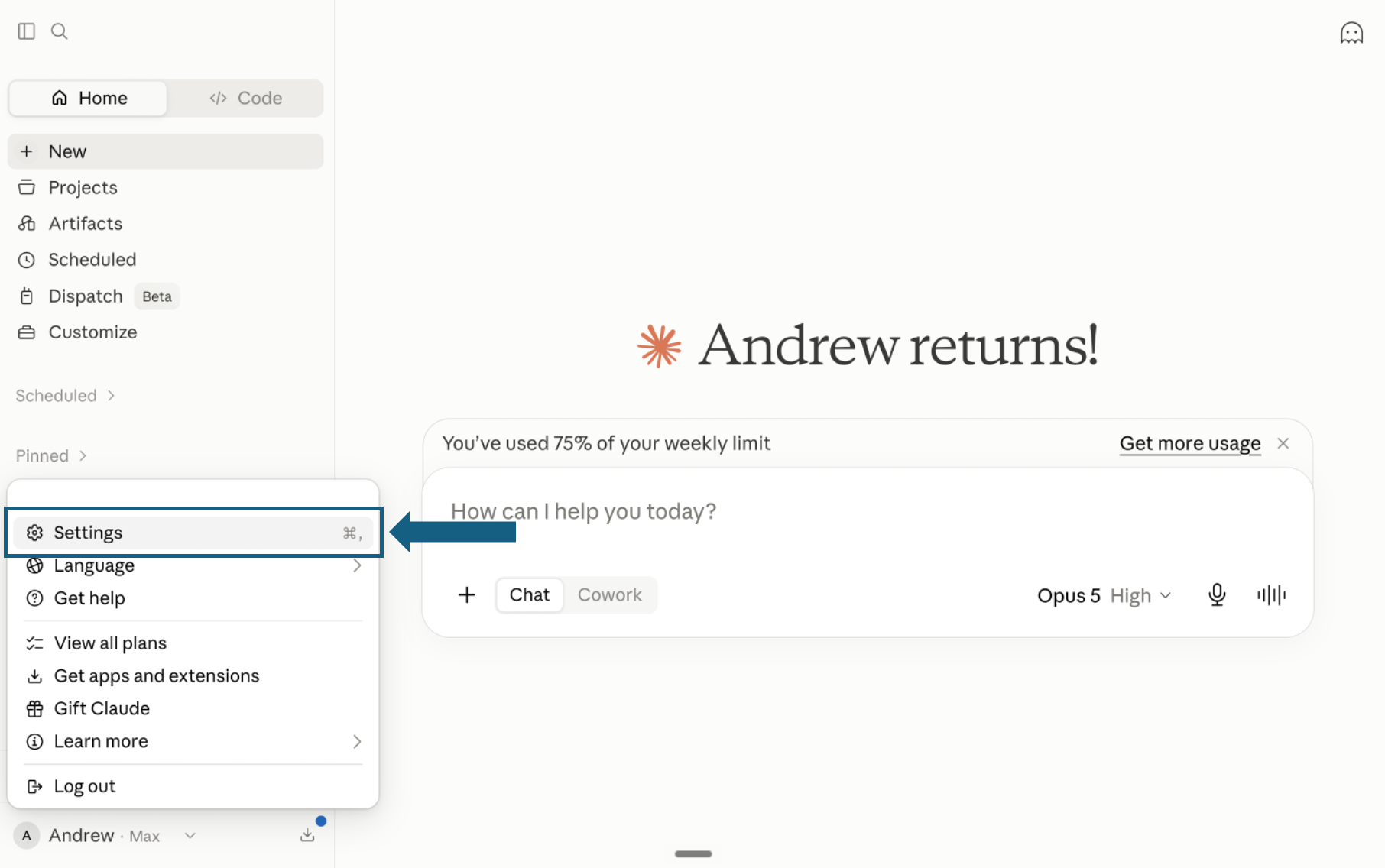
Download the pack and open Settings
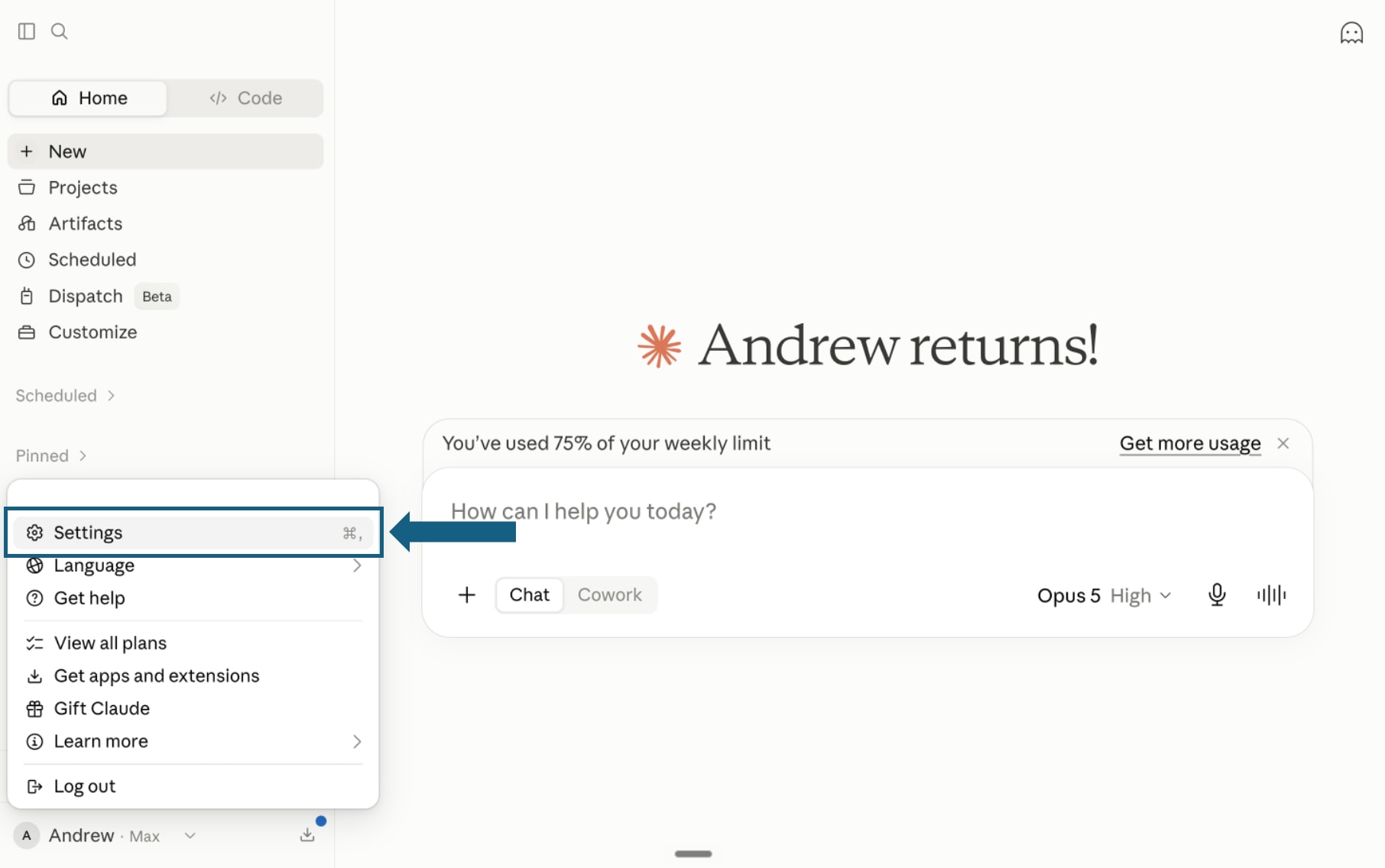
Download the pack and unzip it so each skill remains in its own folder with its SKILL.md file. In Claude, open your profile menu and select Settings.
Open the screenshot to view it full size. - Step 2
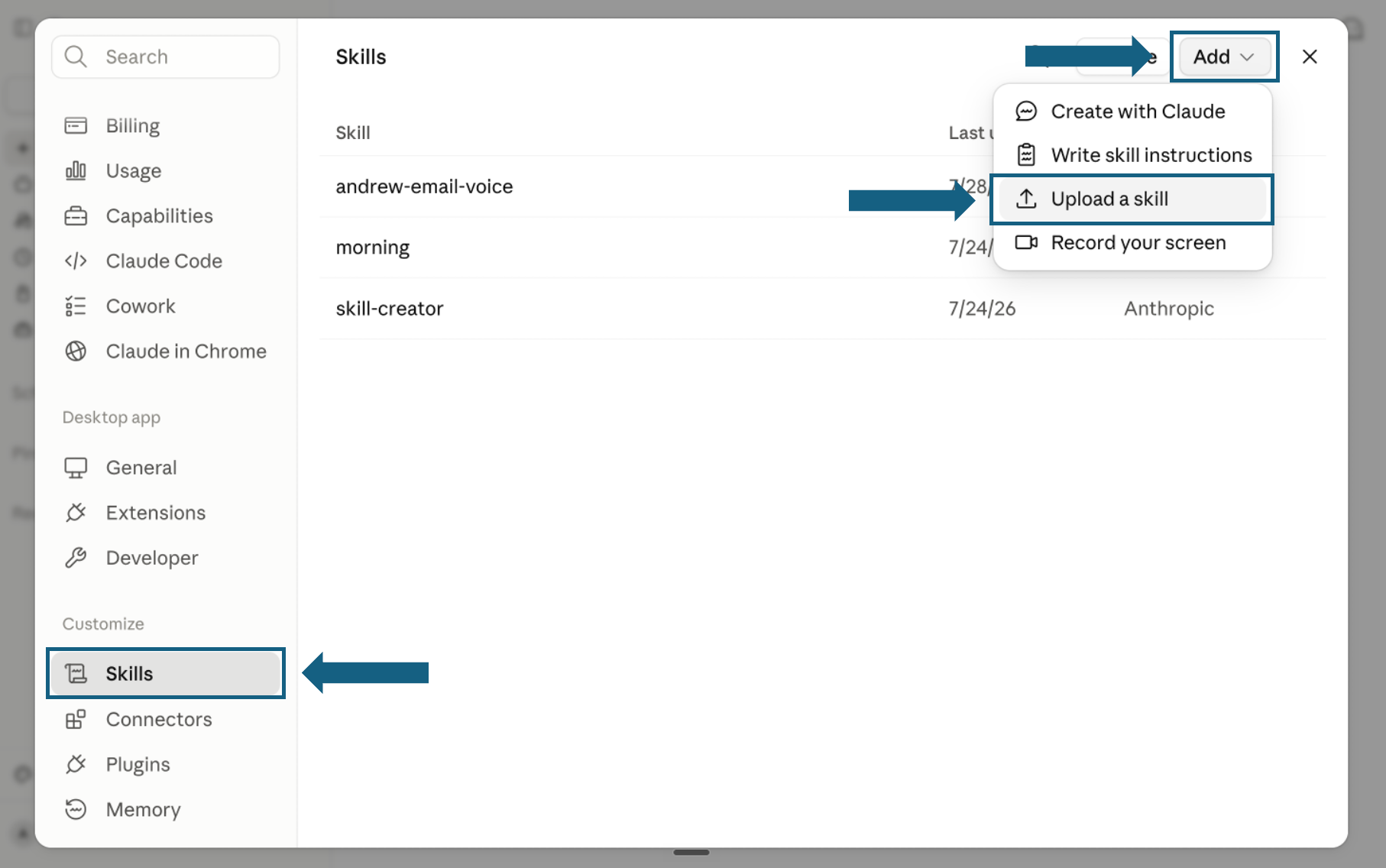
Open Skills and start an upload
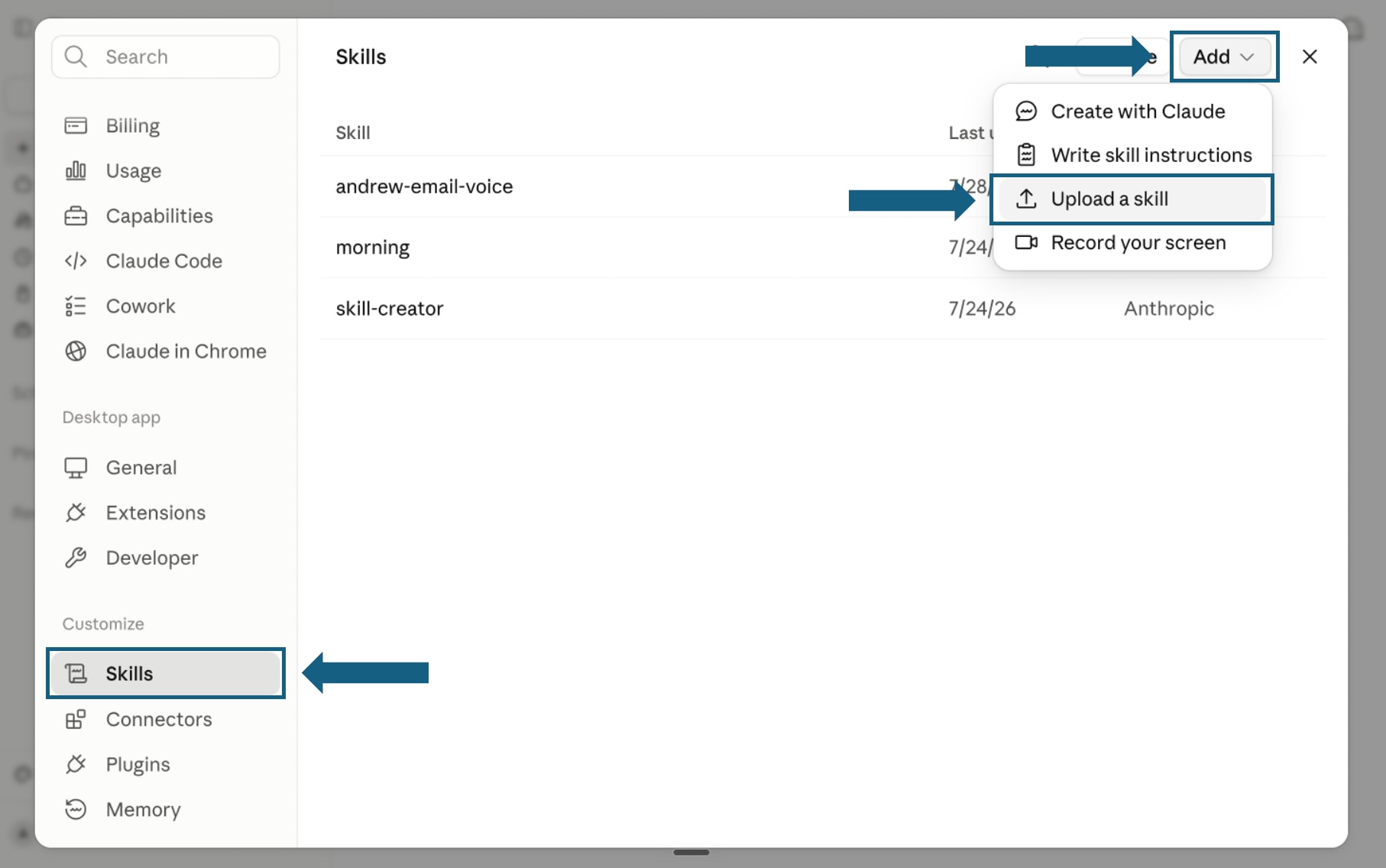
In Settings, select Skills under Customize. Open Add and choose Upload a skill.
Open the screenshot to view it full size. - Step 3
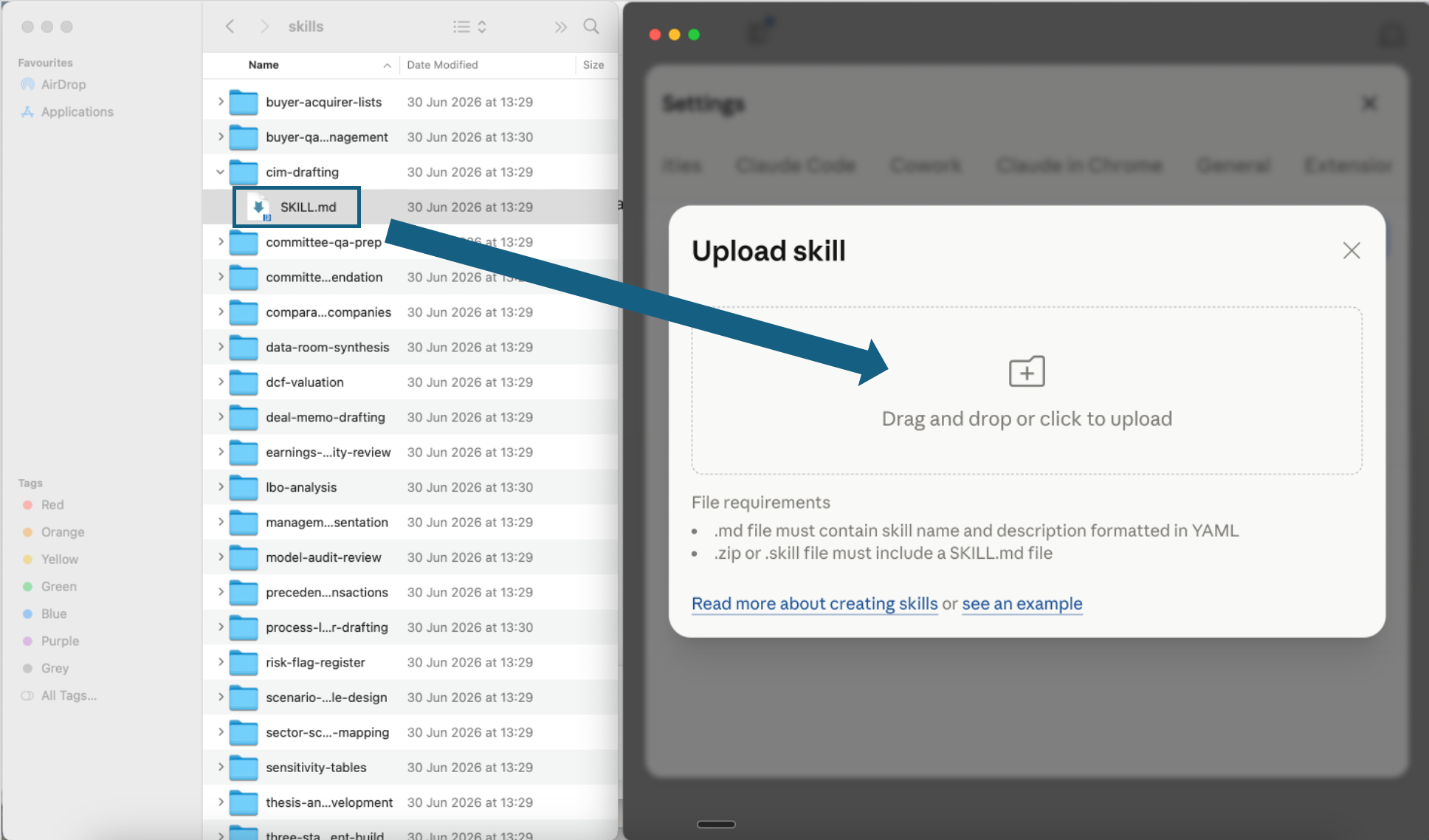
Upload one skill file
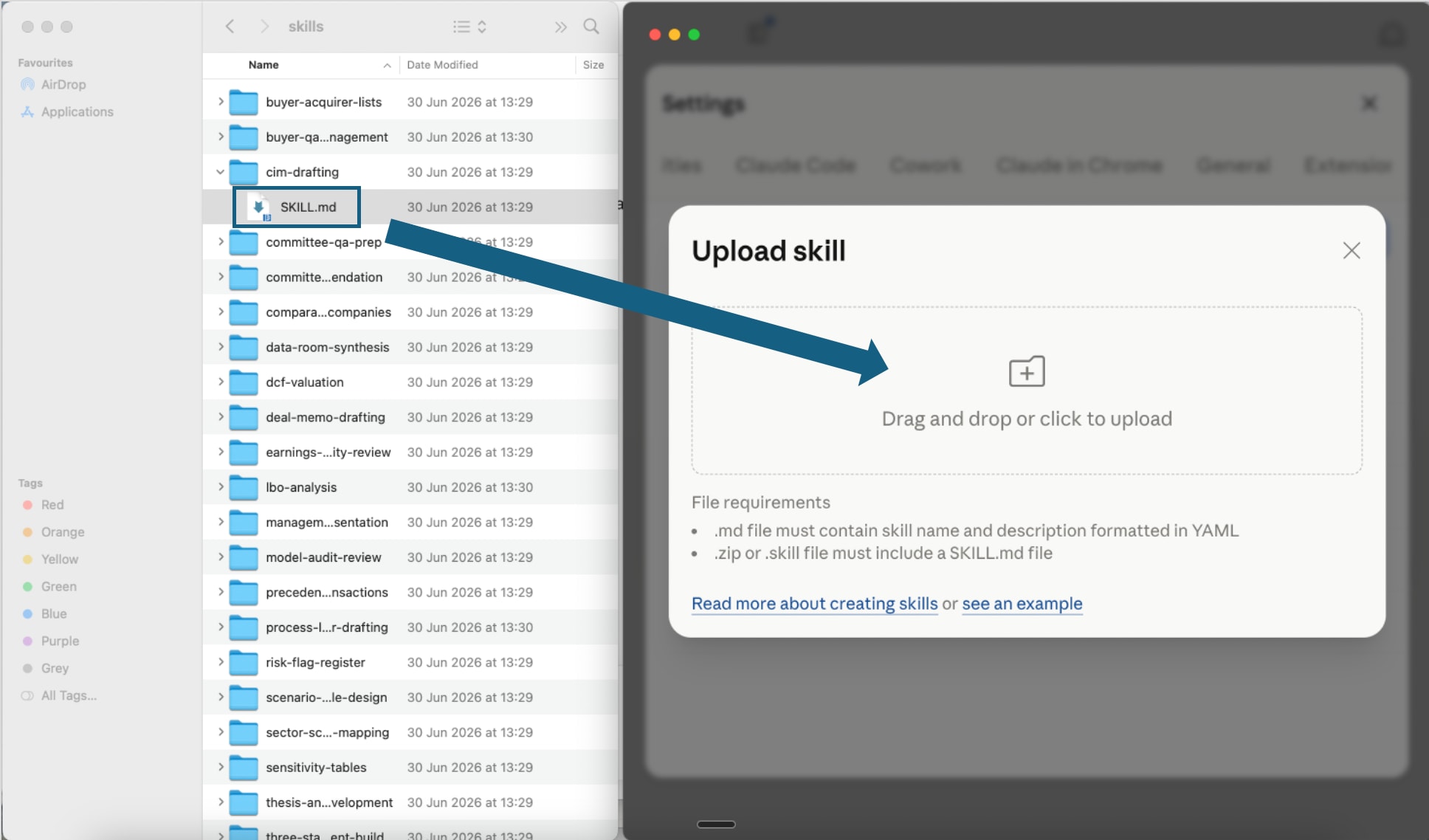
Open one extracted skill folder and drag its SKILL.md file into the upload window, or click the upload area to choose it. Repeat this step for each operations efficiency skill you want to add.
Open the screenshot to view it full size. - Step 4
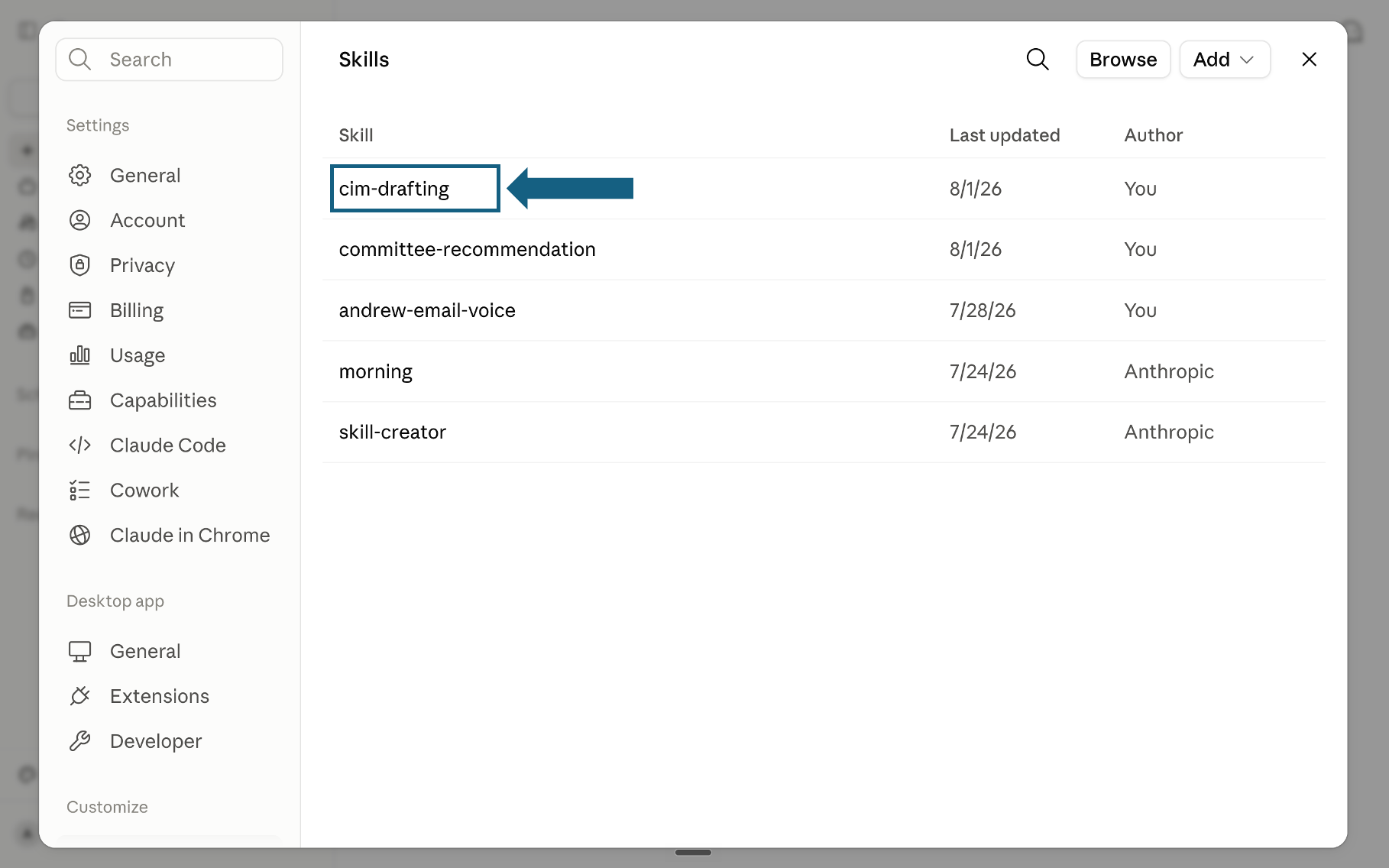
Confirm the skill was added
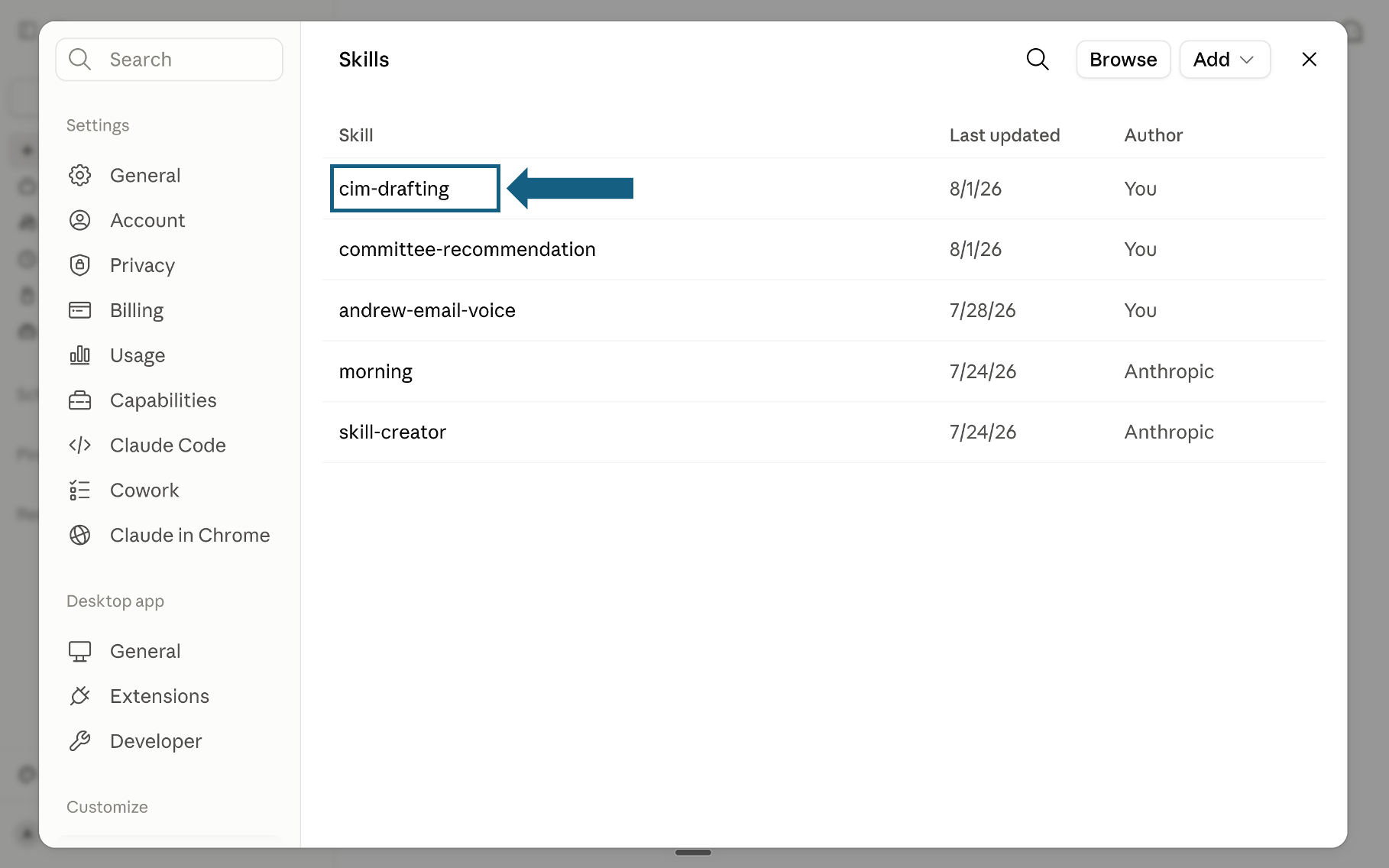
Return to the Skills list and check that the uploaded skill appears. Select its name to open it and review the instructions.
Open the screenshot to view it full size. - Step 5
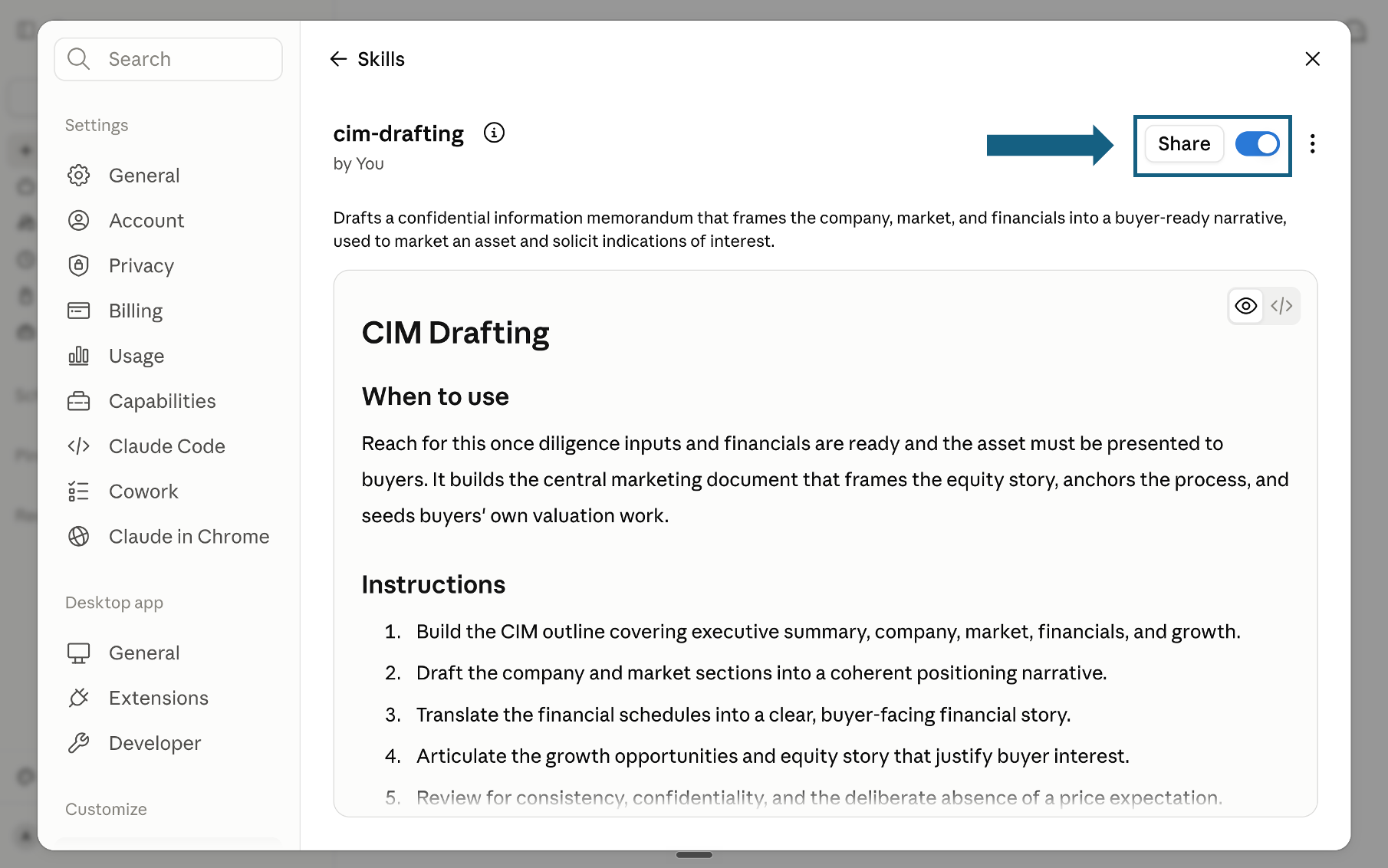
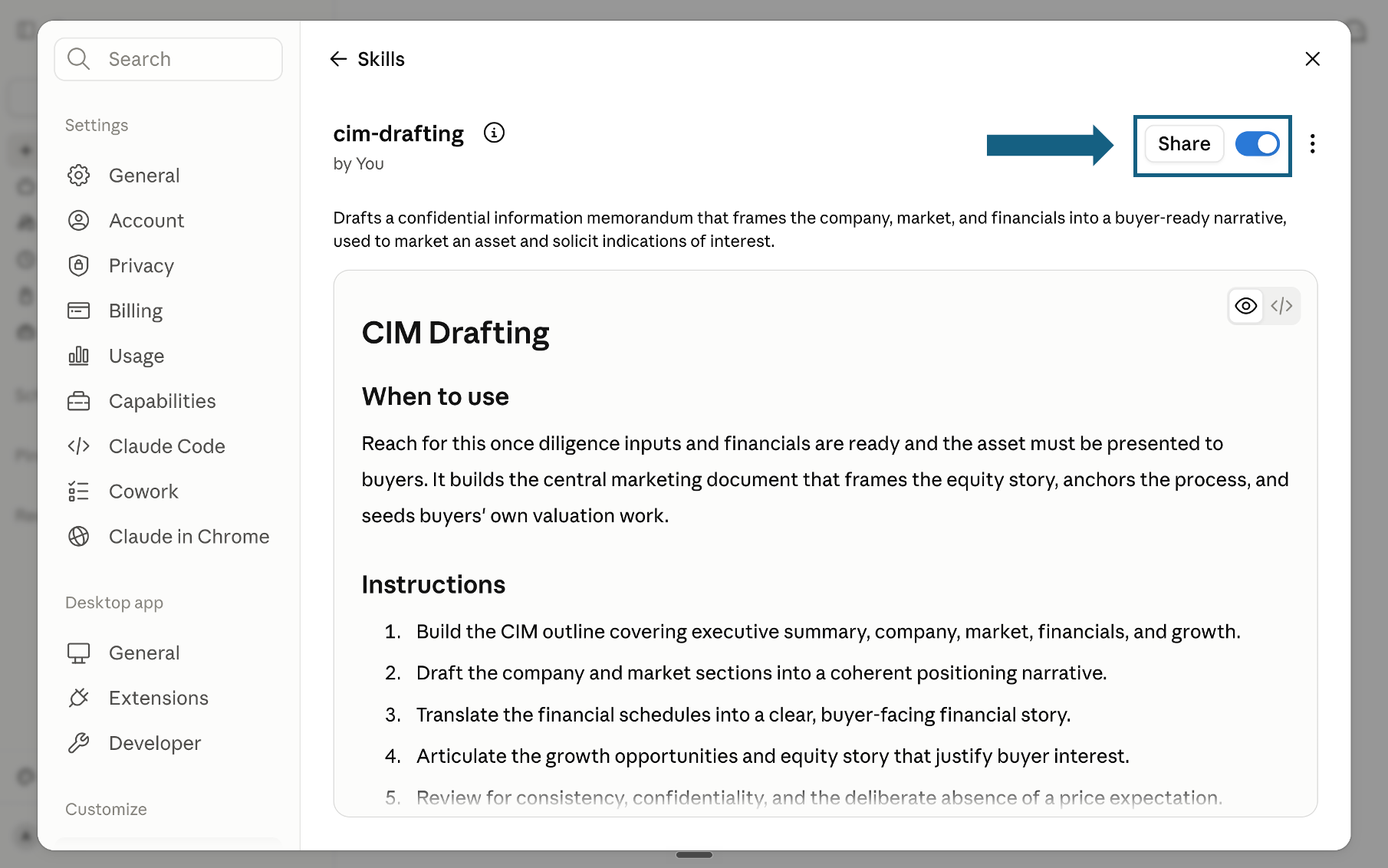
Review and turn on the skill
Review the skill's name, description, and instructions, then make sure the switch beside Share is on. A blue switch means the skill is turned on; sharing it is optional.
Open the screenshot to view it full size.
Try a skill
Name the skill and provide the process data, operating context, or decision inputs it needs. Review every recommendation before using it in a program.
- "Use the operations-health-check skill. Here is the current state data: [paste KPIs, headcount, known issues]."
- "Use the bottleneck-diagnostic skill to find the constraint in this fulfillment process: [paste step names and capacity]."
- "Use the lean-initiative-builder skill to build the improvement program from this list of opportunities: [paste opportunities]."
- "Use the change-readiness-assessor skill before we launch the shared services migration."
How to choose a skill
Match your immediate need to the right skill. For cost reduction work that runs alongside an efficiency program, that pack pairs directly with these skills.
The quality bar
Every skill is designed to push Claude toward outputs that meet the quality standard a senior operations consultant would hold their work to before the client sees it.