

Claude Strategy Skills for Consultants: Five Skills, and the Model to Run Them On
Two decisions sit behind every consultant who installs a Claude skill, and most pages answer only the first. The first is which skills to load: a short sequence that follows an engagement from framing through to value realization, or a broad library you dip into when something comes up. The second is which Claude model to run them on, because the same SKILL.md file produces visibly different work on Claude Haiku 4.5 than it does on Claude Opus 5, and almost nobody says so. This page answers both. It hands over a free five-skill pack built around the stages of a strategy engagement, states where each skill breaks, names the model each one is worth running on, and sends you to the larger libraries when five is not enough.
Quick answer
Install by stage, not by volume. The useful question is not how many skills a pack contains but which one matches the point in the engagement where you are stuck this week, and then whether you are running it on a model capable of the reasoning you are asking for.
For strategy consulting work in Claude, install a small sequence of skills matched to the stages of an engagement rather than one large library: problem framing and issue diagnosis, market and competitive intelligence, strategic option design, operating model and execution, and value governance. Run them on Claude Opus 5, which Anthropic names as the starting point for most workloads, and move up to Claude Fable 5.1 when the reasoning is contested or the analysis has to be carried through to a finished document or deck. Claude Sonnet 5 is the sensible default for recurring structured work, and Claude Haiku 4.5 is too shallow for framing.
How we chose these five
- We built around the shape of an engagement, not around a count. Five skills map to five stages, so the pack is picked by where you are stuck rather than by how large the library is.
- We tested each skill on real engagement material: sponsor briefs, competitor pricing pages, benefit cases and initiative trackers. A skill that only performs on a clean synthetic prompt did not ship.
- We wrote down where each one breaks and put it on this page. Every skill below closes with the case it handles badly, because a skill you deploy in the wrong place costs more than one you never installed.
- We checked the output against a review standard, not a readability standard: would a senior lead sign it before a steering committee. Fluency was ignored as a signal, because fluent and wrong is the normal failure.
- We ignored anything requiring a paid connector, an API key or a build step. Every skill here is one SKILL.md file you upload through Claude settings, and the pack is a zip with no signup.
Download all 5 skills
One zip, one folder per skill. Free, no signup.
Key takeaways
- Pick by engagement stage, not by pack size. The question a skill answers matters more than how many skills sit beside it, and a five-skill sequence installed in order beats a fifty-skill library nobody has read.
- Every skill needs real material brought to it. None of them invents a fact base, and the two that most often disappoint, sizing and governance, disappoint because the source documents or the baselines were never there.
- Know the artifact before you run it. An issue tree, a sourced sizing model, a scoring grid, a phased RACI and a value register are five different deliverables, and only one of them is what you need today.
- The model matters more than the prompt wording. Anthropic tells developers to start most workloads on Claude Opus 5 and move up to Claude Fable 5.1 for demanding reasoning, and the same ordering holds inside the Claude apps.
- Every skill has a failure mode worth knowing before a client sees the output. Thin inputs, missing constraints, absent baselines and unstated politics are the four that account for almost all of the bad output we saw.
Compare the five skills
Five columns, matching the five decision rules above: where you are in the engagement, what you have to bring, what lands, which model it is worth running on, and the case where it breaks. Read the last column first.
Problem Framing and Issue Diagnosis
Restated problem, MECE issue tree, ranked hypotheses
Market and Competitive Intelligence
Sourced TAM/SAM/SOM, competitive grid, whitespace
Strategic Choice and Option Design
Three or four distinct options, scoring grid, recommendation
Execution and Operating Model Design
Operating model deltas, phased roadmap, RACI grid
Governance and Value Realization
Value register, steering roll-up, reasoned at-risk list
If you want breadth rather than a sequence, the stronger page on this site is 21 strategy skills for Claude, which organises a larger library by domain rather than by engagement stage. Start there if you are browsing. Come back here when you know which stage you are solving for.
The 5 strategy Claude skills you get
Each skill covers one stage of a structured strategy engagement, in order. The first two build the fact base. The middle skill turns that fact base into a choice. The last two plan and govern execution. Every block below closes with the case the skill handles badly.
5 strategy Claude skills, one per stage of the engagement
Skill 1
Problem Framing and Issue Diagnosis: Who Is It Built For?
Built for the consultant who has just come out of a kick-off meeting with a sponsor question too broad to work on, and a team that will start analysing something within the hour whether or not the question is right.
Turns a vague strategic question into a tested, MECE issue tree with a prioritized short list of hypotheses. This is the skill that runs first, before any analysis begins, so the team spends its time on the question that actually matters.
It forces a restatement first: what decision the sponsor will actually take, by when, and with what authority, then rewrites the brief around that decision. Only then does it build the issue tree, checking the branches against each other rather than accepting the first decomposition it produces. The hypotheses are testable ones, each carrying the evidence that would falsify it, which is what stops a workstream spending three weeks proving something nobody disputed.
problem-framing-diagnosis
Use when: A sponsor hands you a broad question and the team has not yet agreed on the real, answerable problem underneath it
Output: Restated problem statement, a MECE issue tree, testable hypotheses with an evidence plan, and a ranked top-5 shortlist
The trade-off: It slows the first two days down. On an engagement where the question is genuinely settled, this skill adds a ceremony the team does not need, and a senior lead will frame it faster in a whiteboard session.
Skill 2
Market and Competitive Intelligence: Who Is It Built For?
Built for the analyst holding a folder of industry reports, competitor pricing pages and half-remembered win-loss notes, who has to turn that pile into a sizing a client CFO will not tear apart.
Builds a market sizing view and a structured competitive landscape from whatever fragmented inputs you already have: market reports, pricing pages, win-loss notes. No invented figures, every number tied to a stated source.
Sizing is where AI output most often fails a review, because a plausible number with no method behind it reads exactly like a real one. This skill refuses to emit a figure without the method that produced it and the source underneath, so a reviewer can follow the arithmetic and argue with a step rather than with the total. The competitive grid runs on the same discipline: axes stated before companies are placed, and any company with no public evidence on an axis marked unknown rather than estimated.
market-competitive-intelligence
Use when: The problem is framed and the team needs an outside-in fact base before designing options: market size and who else is competing for it
Output: TAM/SAM/SOM breakdown with sourced sizing method, a MECE competitive landscape grid, and the whitespace gaps that matter
The trade-off: It is only as good as the documents you feed it, and it will say so. If your evidence is one analyst report, this skill produces one analyst report restructured, not independent market intelligence.
Skill 3
Strategic Choice and Option Design: Who Is It Built For?
Built for the team that has a fact base and a favourite answer, and needs the favourite answer to survive contact with three alternatives that were designed properly rather than built to lose.
Generates a genuinely distinct set of strategic options and stress-tests each one against the same evaluation criteria. Forces the logic apart: organic build, partnership, acquisition, exit, rather than three flavors of the same idea.
The most common failure in an options section is the straw man: two options written to be rejected and one written to be chosen. This skill fixes the criteria before it generates any option, which removes the temptation to score toward a conclusion, and it forces the options apart on strategic logic rather than execution detail, so build, partner, acquire and exit read as genuinely different bets rather than three budget levels of the same plan. Each carries its single largest risk, named, and the recommendation shows its reasoning.
strategic-option-design
Use when: The fact base exists and the team needs to move from diagnosis to a real strategic choice, not the first idea in the room
Output: 3 to 4 genuinely distinct options, a scoring grid against fixed criteria, the biggest risk per option, and a reasoned recommendation
The trade-off: Structured option design is slower and less popular than converging early. On a small engagement with one obvious path, the scoring grid is a formality that will read as padding to the client.
Skill 4
Execution and Operating Model Design: Who Is It Built For?
Built for the consultant writing the implementation section, where a decision that was crisp on one slide has to become an operating model, a sequence and a list of people who will be held to it.
Converts a chosen strategy into an operating model and a phased execution roadmap with named owners. This is the handoff point from what was decided to how it gets done, with accountability made explicit before execution starts.
Execution sections fail quietly. They list workstreams, assign them to functions rather than people, and give each phase a start date but no test for whether it finished. This skill attaches entry and exit criteria to every phase, so a steering committee can tell a phase that ended from a phase that ran out of time, and it pushes ownership down to a named role rather than a department. The RACI comes out as a grid, the form that survives being pasted into a client template.
operating-model-execution-plan
Use when: A strategic option is chosen and the team needs to plan how it actually gets built: who owns what, and in what sequence
Output: Required operating model changes, a phased roadmap with entry and exit criteria, a milestone and owner list, and a RACI table
The trade-off: It produces a plan of record, not a negotiation. Where the sequencing is really a political settlement between two function heads, no skill will get you there and the roadmap it writes will be overtaken in the first week.
Skill 5
Governance and Value Realization: Who Is It Built For?
Built for the person who owns the monthly steering pack, and for the client sponsor who has noticed that every initiative has been amber for five months and nobody can say what that means.
Builds the governance cadence and tracking register that replaces status-update theater with a real value-tracking discipline. The skill that closes the loop most engagements never close.
A value register is not a status report: it tracks the benefit rather than the activity, so an initiative can be on schedule and still be failing. This skill builds the register by benefit, ties each to the baseline it was measured against, and rolls it up for a steering committee without losing the line back to the underlying item. At-risk entries must carry a reason and a corrective action, which is the rule that kills the amber-forever pattern. It is the least glamorous skill here and the one engagements most often skip.
value-realization-tracker
Use when: Execution has started and leadership needs an honest, recurring read on whether the committed value is actually landing
Output: A value realization register by benefit, a steering-committee roll-up, reasoned at-risk items, and priority actions for the next cycle
The trade-off: It only works if somebody keeps feeding it. Run once for a board pack it produces a register that looks rigorous and is a snapshot, which is arguably worse than no register at all.
Oria: Who Is It Built For?
None of the five skills above produces slides, and for a lot of engagements that is the step that actually costs the weekend. Oria is the tool we build, and it exists for one narrow job: corporate documents and consulting presentations. Board packs, steering committee decks, diligence exhibits, operating model slides, dense frameworks held to an enforced corporate template. That is the whole design, and it is aimed squarely at the output a tier-one strategy firm produces.
It reaches you two ways. As a PowerPoint add-in, running in the task pane on Windows, macOS and PowerPoint for the web. And as a connector for Claude and ChatGPT over MCP, so a slide can be built from the chat you are already in, without opening PowerPoint at all. That second route is the one that pairs with the skills on this page: run the option design skill, then ask for the scoring grid as a slide in the same conversation. On security, Oria does not train on customer content, Professional and Team do not persist presentation content after delivery, and Enterprise adds private cloud deployment and custom LLM integration.
The trade-off: Oria is built for the corporate environment only, so it loses on highly visual work. Founder fundraising and pitch decks, launch and campaign decks, student presentations, marketing one-pagers: where the job is visual impact rather than defensible content held to a template, a design-led tool like Gamma, Canva, Pitch or Beautiful.ai will beat it, and will look better doing it. If that is your deck, go there instead.
Which Claude Model Is Best for Strategic Thinking?
This is the question the skills pages mostly skip, and it changes the output more than the wording of your prompt does. A skill is a set of instructions; the model is what reasons over them. Anthropic publishes its own guidance and it is unusually direct: most workloads start with Claude Opus 5, and you move to Claude Fable 5.1 when results at higher effort still fall short on demanding reasoning or long-horizon work. Anthropic's model selection matrix names, as an example of the highest-capability tier, "analysis carried through to a finished document, spreadsheet, or deck", which is a fair description of a consulting engagement.
The practical spread is wide. Anthropic's model documentation puts Claude Fable 5.1, Claude Opus 5 and Claude Sonnet 5 on a 1M-token context window, roughly 555,000 words on the current tokenizer, while Claude Haiku 4.5 sits at 200K. Price runs from $1 per million input tokens on Haiku 4.5 to $10 on Fable 5.1, a tenfold spread across four models that all run the same skill file. The second lever is effort, and Anthropic is explicit that tuning it is often a better move than switching models at all.
Claude Fable 5.1
claude-fable-5-1
1M tokens context. $10 input, $50 output per MTok.
Anthropic describes it as its most capable widely released model, for demanding reasoning and long-horizon agentic work.
The right call for a contested framing, a board-level option set, or an analysis carried the whole way through to a finished deck. Thinking is always on, which is why it is slower.
Claude Opus 5
claude-opus-5
1M tokens context. $5 input, $25 output per MTok.
Anthropic's own guidance is blunt: most workloads start with Claude Opus 5.
The default for four of the five skills here. Deep reasoning, a 1M-token context that swallows a document room, and enough headroom that you rarely wonder whether the model was the constraint.
Claude Sonnet 5
claude-sonnet-5
1M tokens context. $2 input, $10 output per MTok.
Anthropic positions it as the best combination of speed and intelligence.
Genuinely good enough for the recurring, structured work: the monthly value register, a RACI refresh, a second pass over a document you have already framed. It is the one to default to for volume.
Claude Haiku 4.5
claude-haiku-4-5
200K tokens context. $1 input, $5 output per MTok.
Anthropic calls it the fastest model with near-frontier intelligence.
Wrong tool for strategy work. The 200K context is a fifth of the others, which is the binding limit the moment you paste a document room, and framing quality drops in a way you will notice.
Read that grid as a ladder, not a ranking. Run problem framing and option design at the top of it, because those two stages are where a shallow answer costs you a week, and drop down for the recurring work where the structure is already fixed. One caution worth stating plainly: none of this rescues a thin input. A better model applied to three bullet points produces a more confident tree of assumptions, not a better diagnosis.
Why a skill instead of a prompt?
A skill is a folder holding one SKILL.md file: plain-English instructions plus a name and a description that Claude reads at startup. It loads the full file only when your request matches, which is why you can install five without paying for five in context on every message. The practical difference from a saved prompt is consistency: the method is applied the same way in week one and week nine, by you and by the analyst who joined on Monday.
That consistency is the part practitioners report noticing. Yusuke Kaji, General Manager of AI at Rakuten, put it this way in Anthropic's Agent Skills announcement, describing a management accounting workflow rebuilt around skills: "What once took a day, we can now accomplish in an hour." MJ Felix, a product manager at Notion, made the same point about the mechanism rather than the speed in the same announcement: skills mean "less prompt wrangling on complex tasks, more predictable results". That is the case for installing five files instead of keeping five prompts in a document.
It is also no longer a niche format. Mahesh Murag, a product manager at Anthropic, told VentureBeat when the company opened Agent Skills as an independent standard that its public skills repository had already passed 20,000 stars, with tens of thousands of community-created skills, and that enterprise customers were running skills in production across legal, finance, accounting and data science. The demand side has moved too: Source Global Research's report The UK Consulting Market in 2026 found that buyers describing themselves as cautious about deploying generative AI fell from 50% in 2025 to 23% in 2026, while those who had deployed it or were eager to rose from 15% to over 40% in a single year. Clients asking how you use it is now the normal case.
One access note before you download: Anthropic makes Skills available on the Free, Pro, Max, Team and Enterprise plans, provided code execution is switched on, and you upload a SKILL.md file through Settings. For the wider view, the consultants guide to Claude is the fuller treatment, and the frameworks field guide covers the methods these skills encode.
Setup Guide
- Step 1Download all 5 skills (.zip)
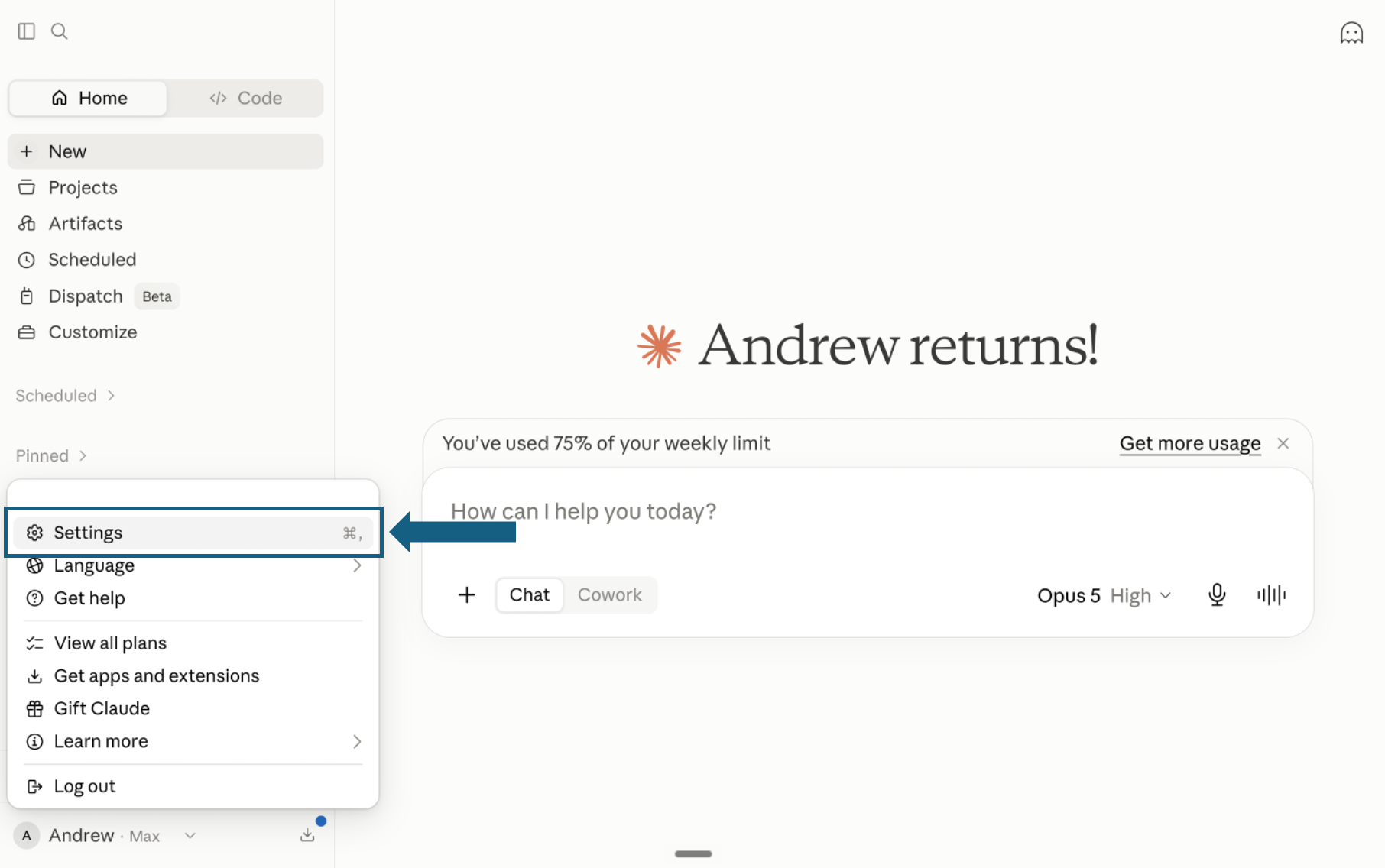
Download the pack and open Settings
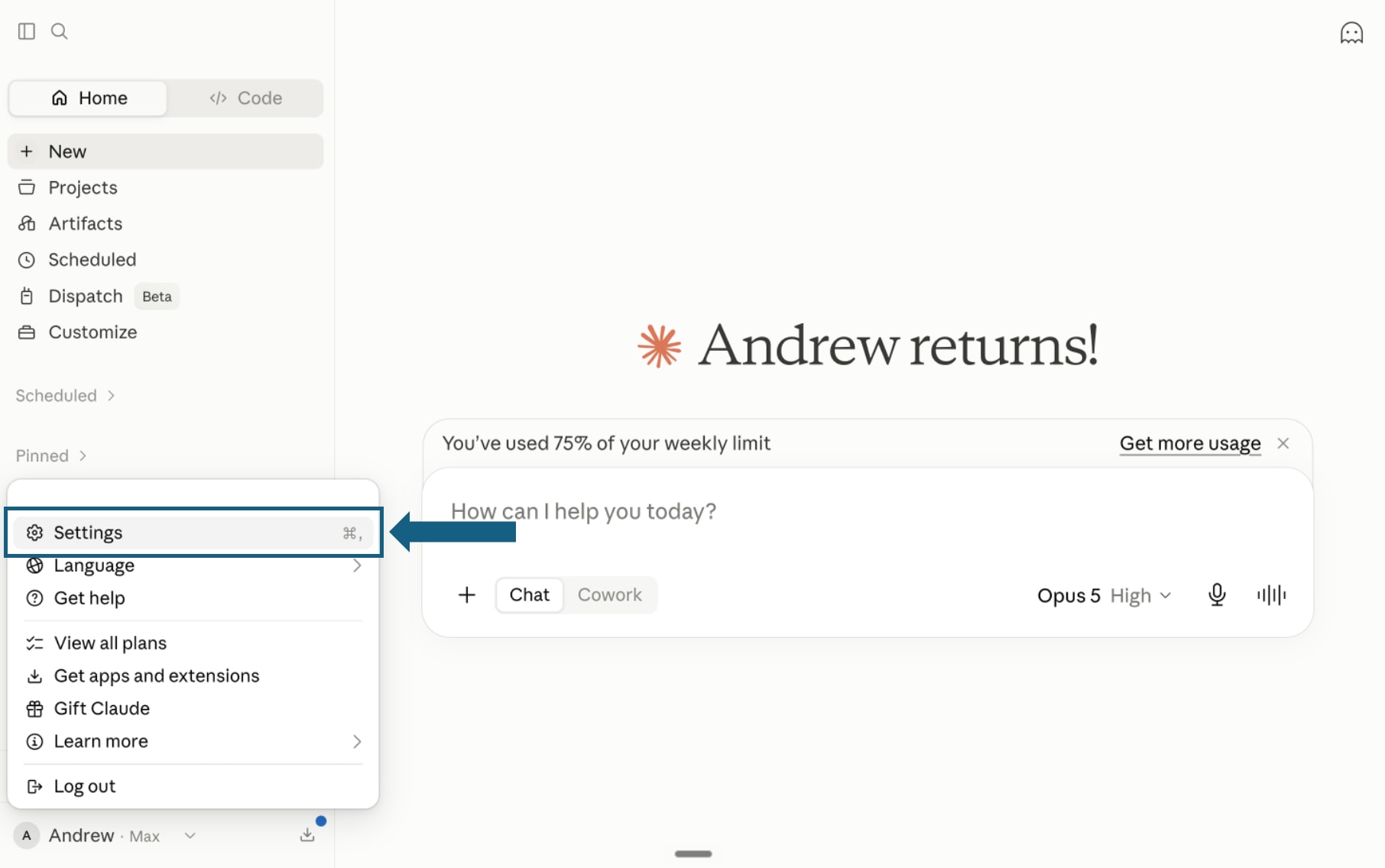
Download and unzip the pack so each skill remains in its own folder with its SKILL.md file. In Claude, open your profile menu and select Settings.
Open the screenshot to view it full size. - Step 2
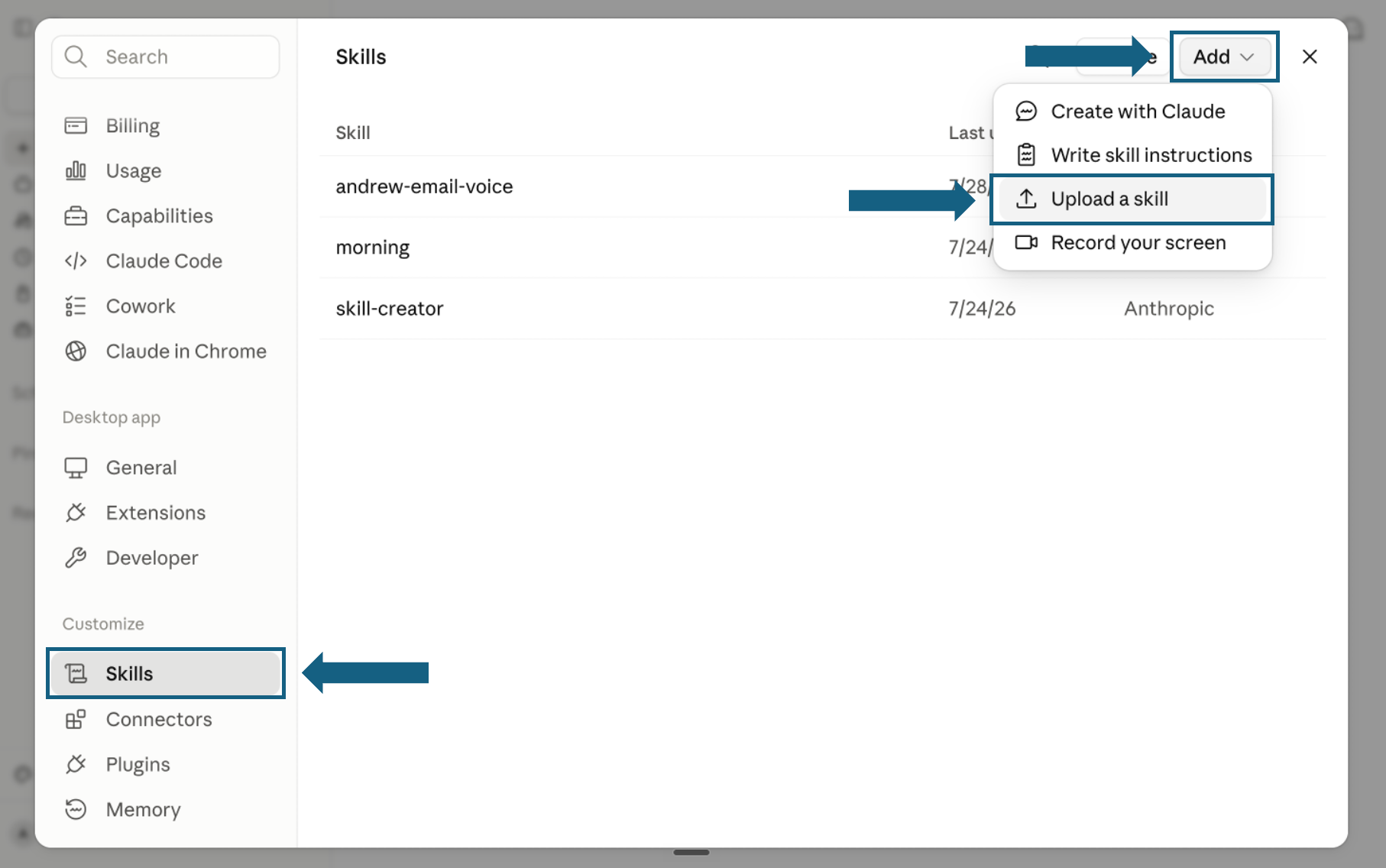
Open Skills and start an upload
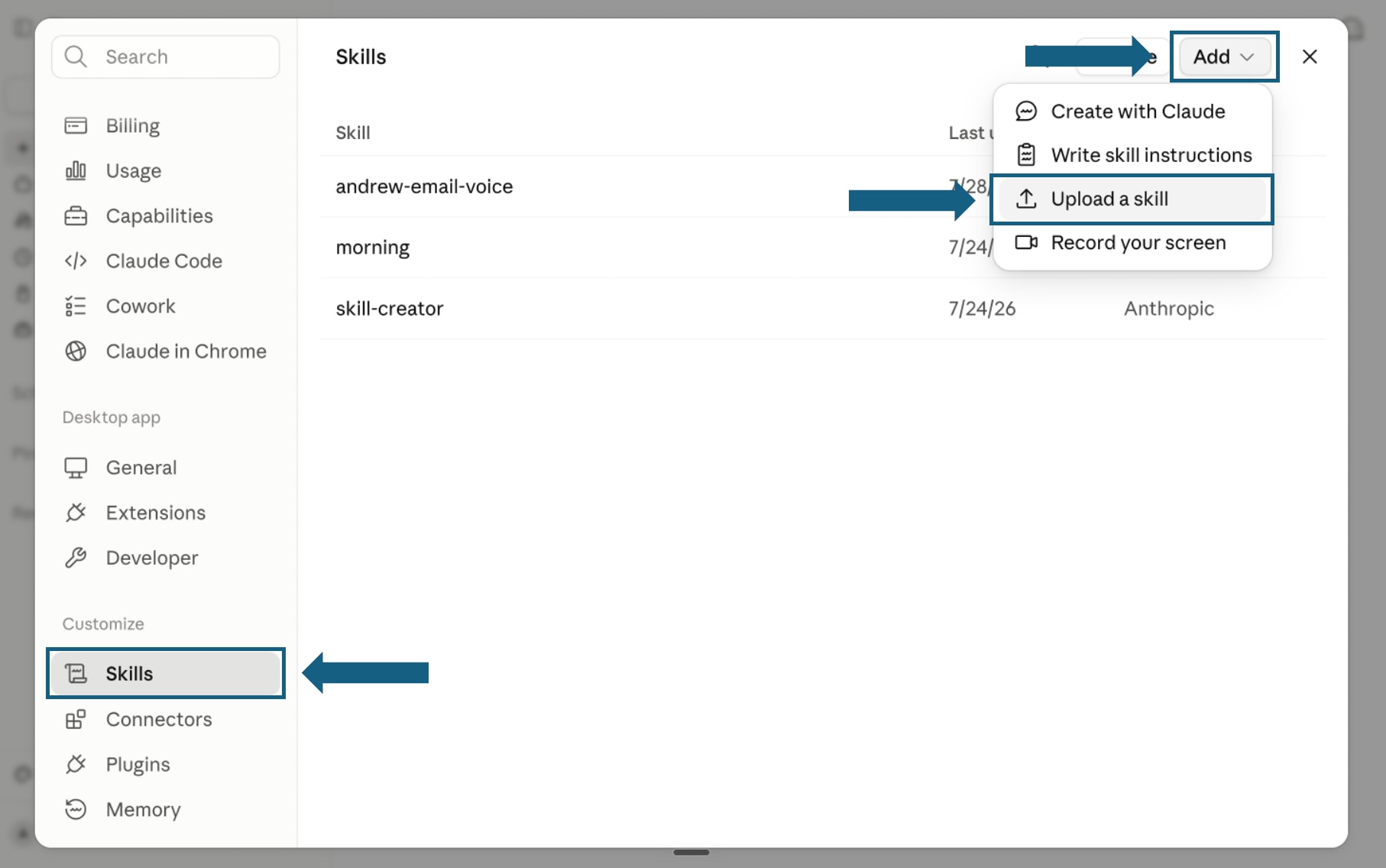
In Settings, select Skills under Customize. Open Add and choose Upload a skill.
Open the screenshot to view it full size. - Step 3
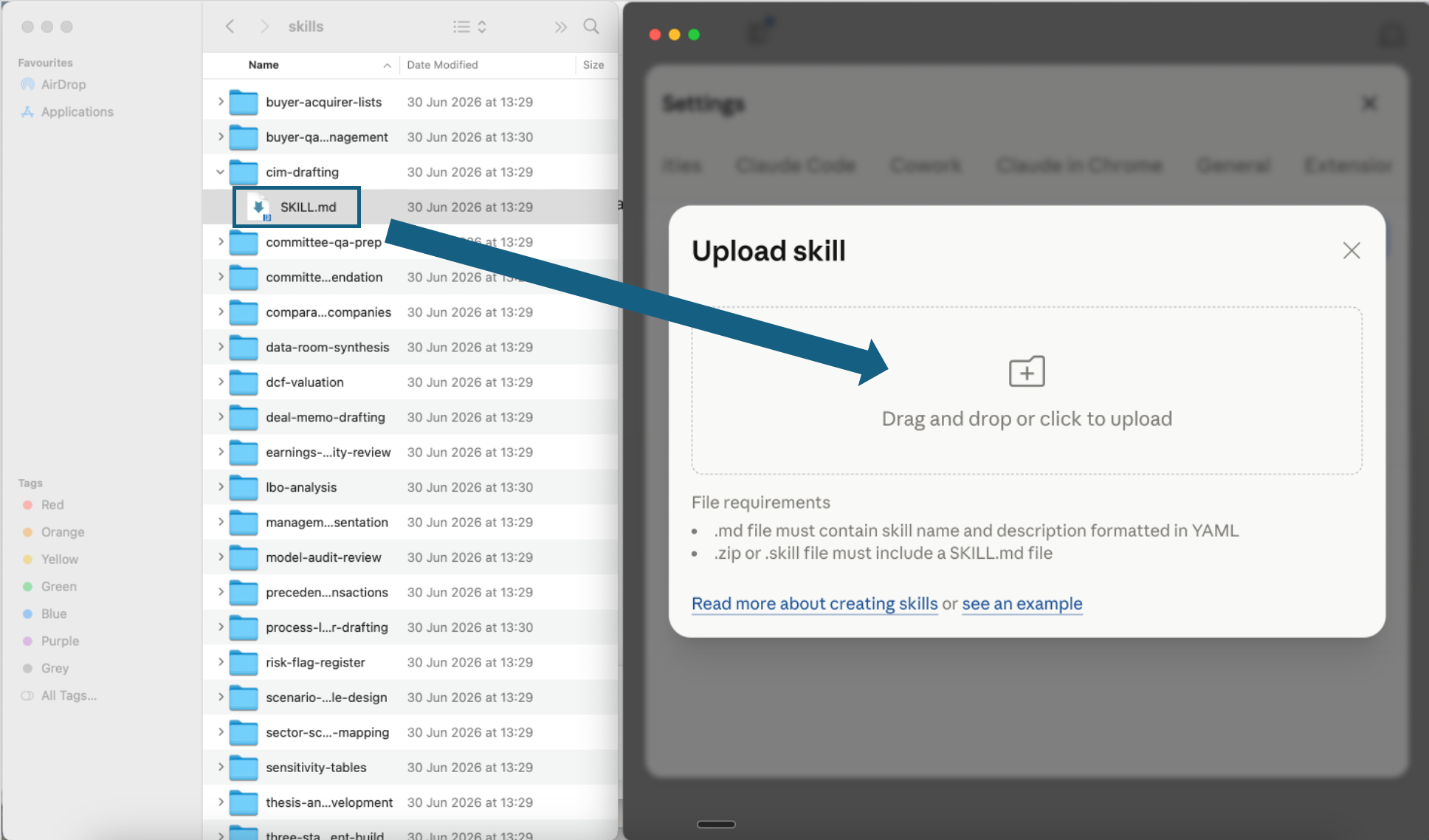
Upload one skill file
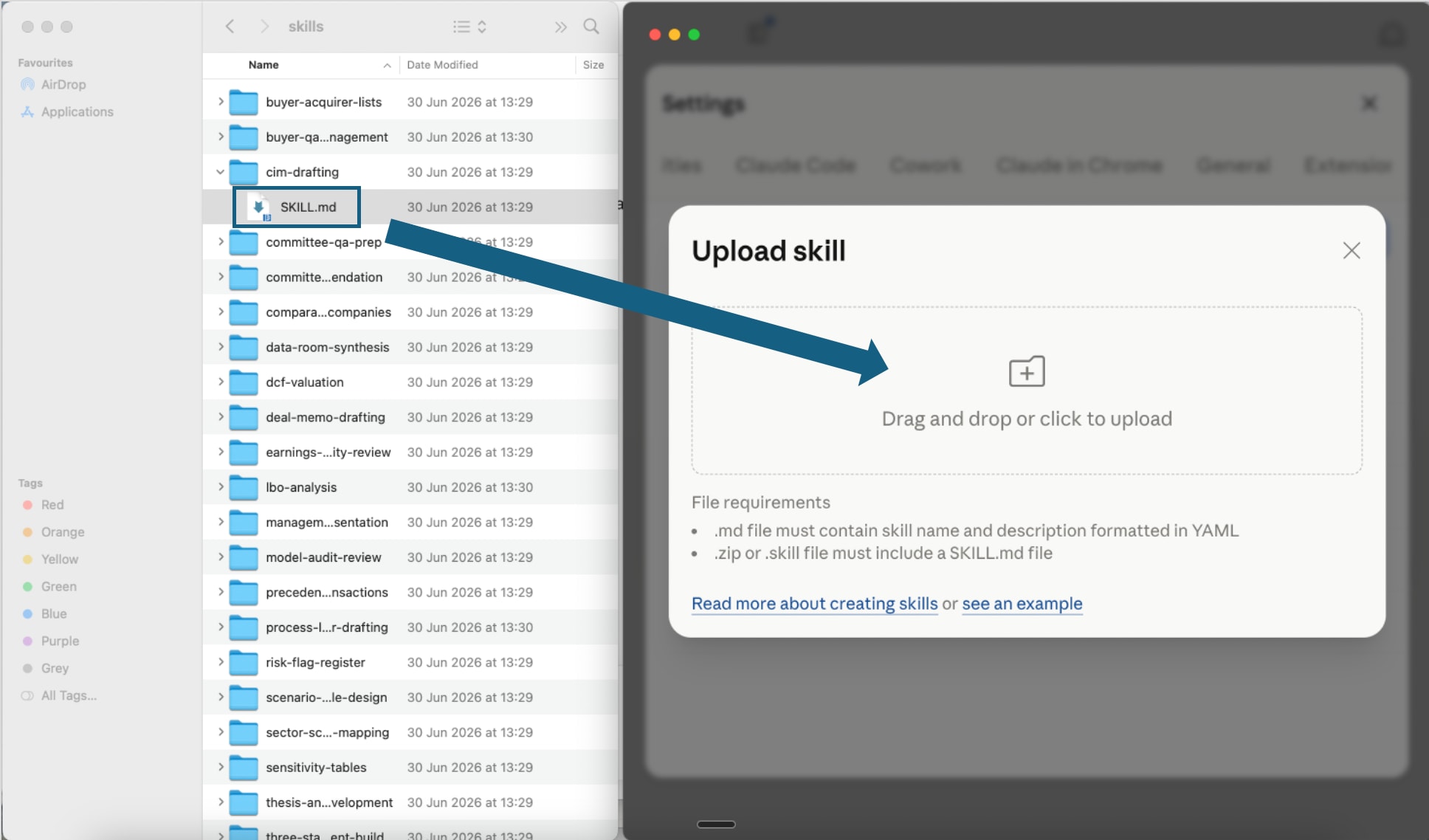
Open one extracted skill folder and drag its SKILL.md file into the upload window, or use the file picker. Repeat for each strategy skill you want to add.
Open the screenshot to view it full size. - Step 4
Confirm the skill was added
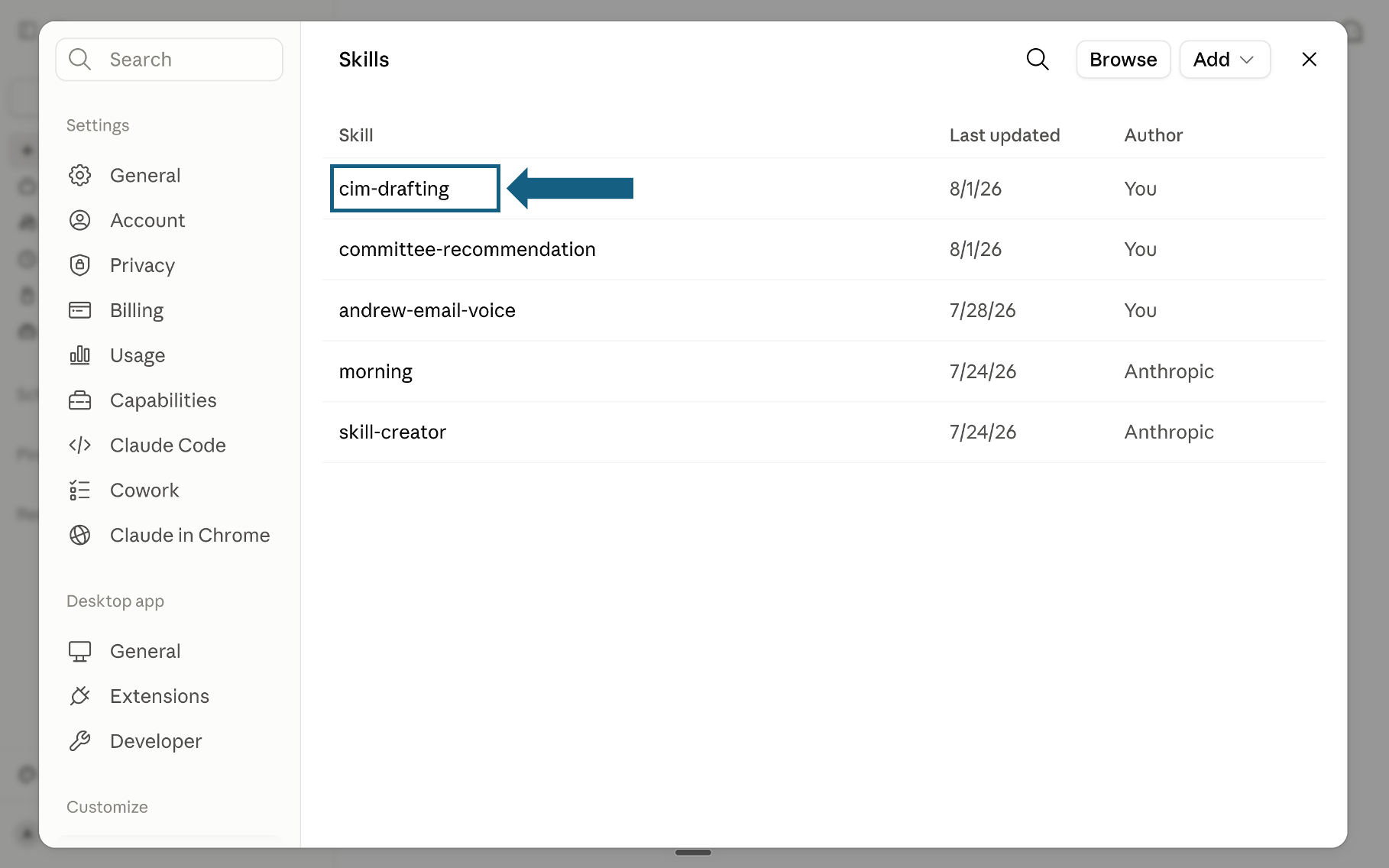
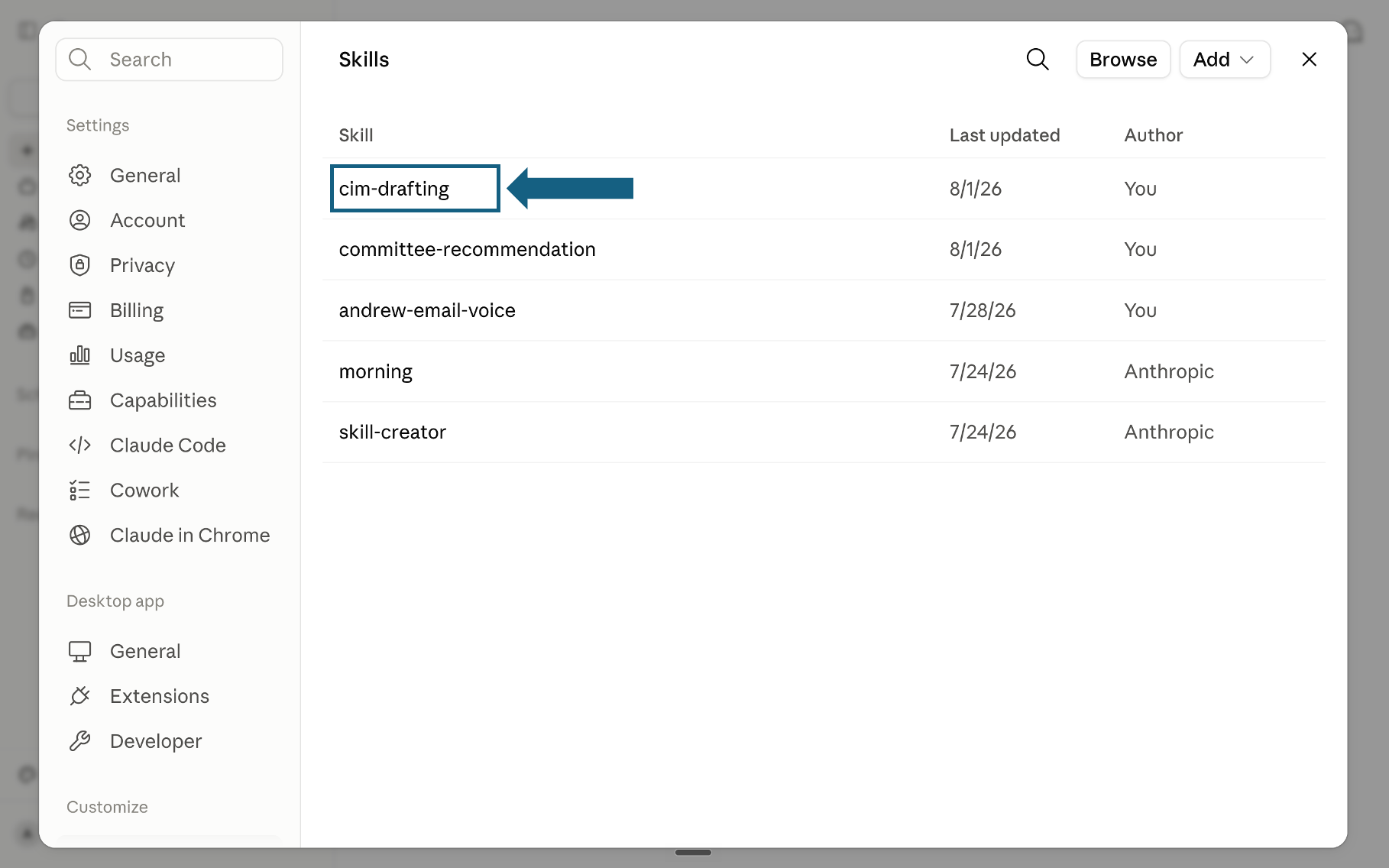
Return to the Skills list and confirm that the uploaded skill appears. Select its name to open it.
Open the screenshot to view it full size. - Step 5
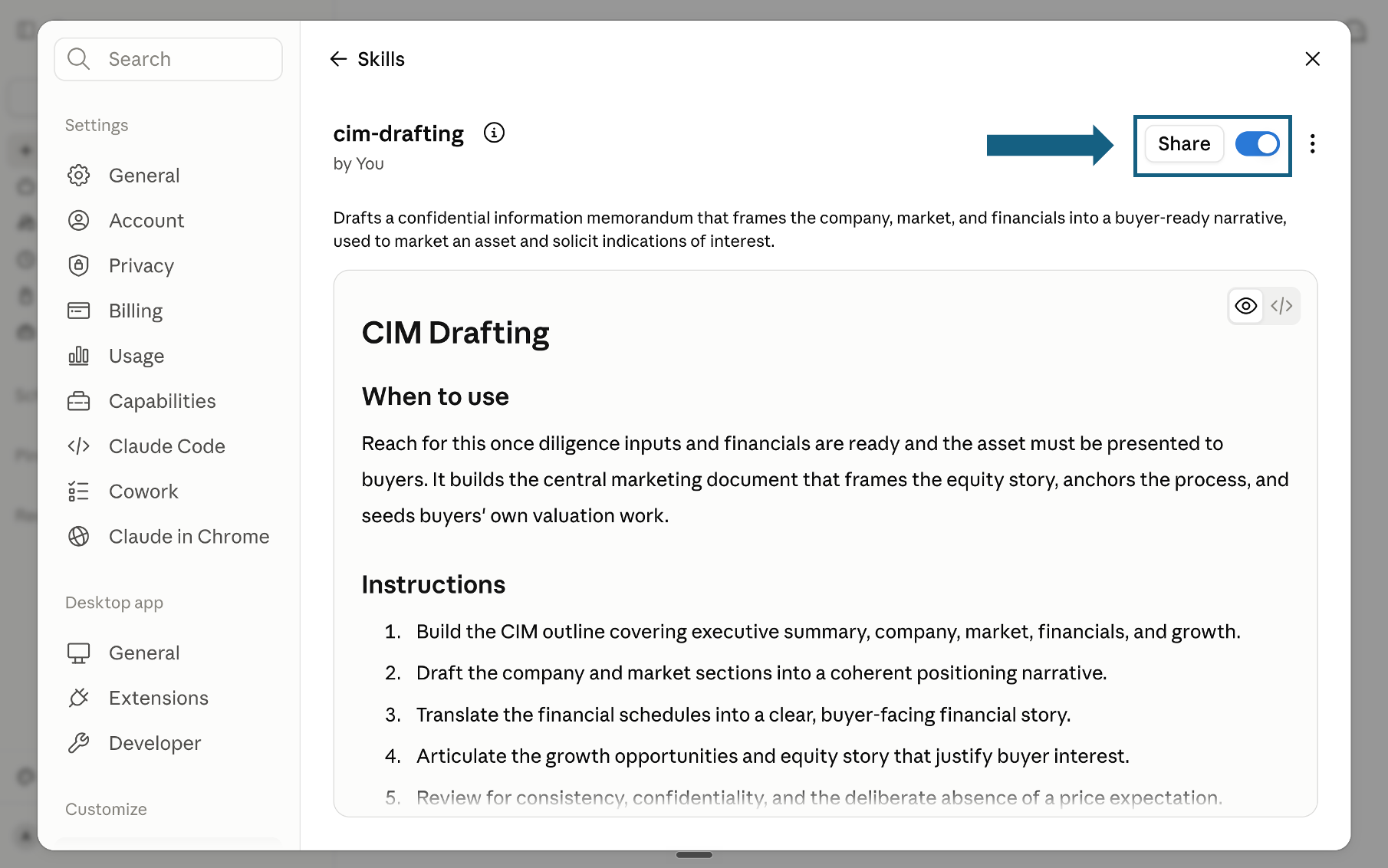
Review and turn on the skill
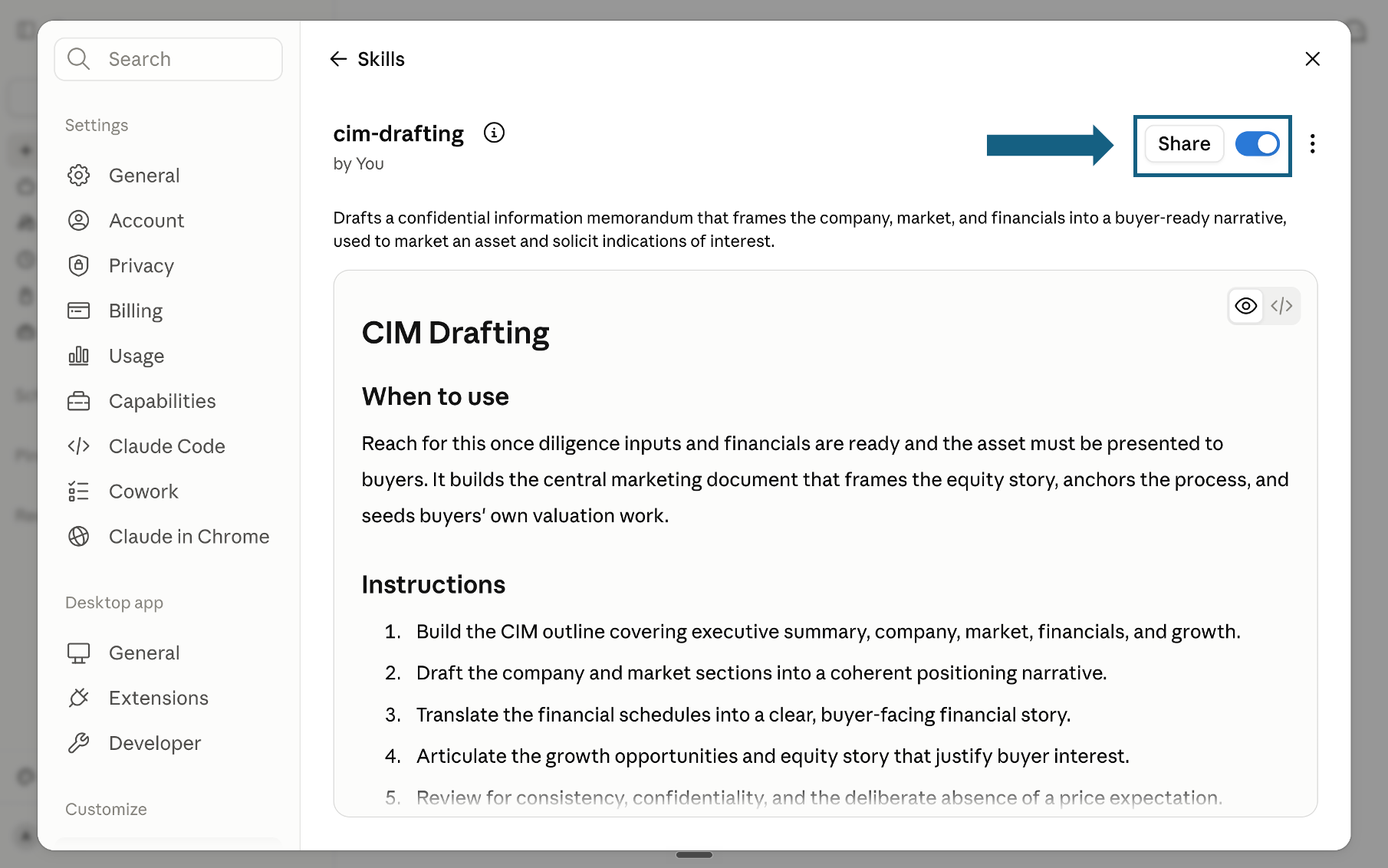
Review the skill's name, description, and instructions, then confirm its switch is on. Sharing the skill is optional.
Open the screenshot to view it full size.
Try a skill
Tell Claude which skill to use and provide the relevant files or context. Review every output before sharing it.
- "Use the problem-framing-diagnosis skill on this sponsor brief and build a MECE issue tree: [paste notes]."
- "Run the market-competitive-intelligence skill on these reports and competitor pricing pages: [paste inputs]."
- "Use the strategic-option-design skill to score build, partner, and acquire against fit, value, risk, capital, and time to impact."
- "Run the value-realization-tracker skill on these initiatives and flag which are at risk of missing the in-year target: [paste initiatives]."
If this is not your pack, go here
This is a narrow pack: five skills, one engagement shape. Most readers who land here want one of the pages below instead, and it is faster to say so than to argue you into a download.
The quality bar
Every skill is designed to push Claude toward output that would hold up in a real steering committee review, not just produce a plausible-sounding draft. The standard is the one a senior strategy lead would apply before a client or board meeting.
Frequently asked questions
What are Claude skills for consultants?
A Claude skill is a folder containing a single SKILL.md file: plain-English instructions that teach Claude a repeatable method, which it loads only when your request matches the skill description. For consultants that means a method like MECE issue framing or criteria-based option scoring is applied the same way every time, instead of being re-explained in each prompt. Anthropic makes Skills available to Pro, Max, Team and Enterprise users in the Claude apps, and you upload them through Settings.
Which Claude model is best for strategic thinking?
Claude Opus 5 for most of it, and Claude Fable 5.1 when the reasoning is genuinely contested or the analysis has to be carried through to a finished document. Anthropic's own model guidance says most workloads start with Claude Opus 5 and to move to Claude Fable 5.1 when results at higher effort still fall short. Claude Sonnet 5 is the sensible default for recurring structured work. Claude Haiku 4.5 is too shallow, and its 200K context is a fifth of the others.
Do I need all five skills, or can I install just one?
Install one. Each skill is a standalone SKILL.md file with no dependency on the others, so the common pattern is to upload the skill for the stage you are stuck at today and add the rest as the engagement moves. Loading all five at once is useful mainly when you want consistent structure across a whole engagement, because the output formats are designed to hand off to each other in sequence.
How is this different from the 21 strategy skills pack?
The 21-skill pack is a library organised by domain, and it is the better starting point if you want breadth or are browsing for a method. This pack is a five-step sequence mapped to the stages of a single engagement, so it is narrower on purpose. If you are unsure which you want, start with the 21-skill library: it covers more ground and most consultants find what they need there first.
Do Claude skills work on the free plan?
Yes. Anthropic makes Skills available on the Free, Pro, Max, Team and Enterprise plans, uploaded through Customize then Skills, with code execution switched on first. The skills are also usable through the Claude API and Claude Code on a developer account, which is how most teams run them at volume, but that is a different route with its own setup.
Can Claude turn the skill output into a client-ready deck?
Claude will produce the structure and the content, and for many teams that is enough. Turning it into slides held to a corporate template is a separate job: Oria runs as a PowerPoint add-in and as a connector for Claude and ChatGPT over MCP, so a slide can be built from the chat you are already in. If what you need is visual impact rather than template compliance, a design-led tool will do it better.